The Basic OR rule
The Basic OR rule applies when the set of outcomes you are interested in (asked about) are MUTUALLY EXCLUSIVE. Saying that they are mutually exclusive means that only one of these specified outcomes could actually occur; they cannot co-occur. In our example above you cannot get both a 4 and a 5 when you roll a die, it is one or the other. Similarly, a child cannot have both red and brown hair, only red OR brown hair.
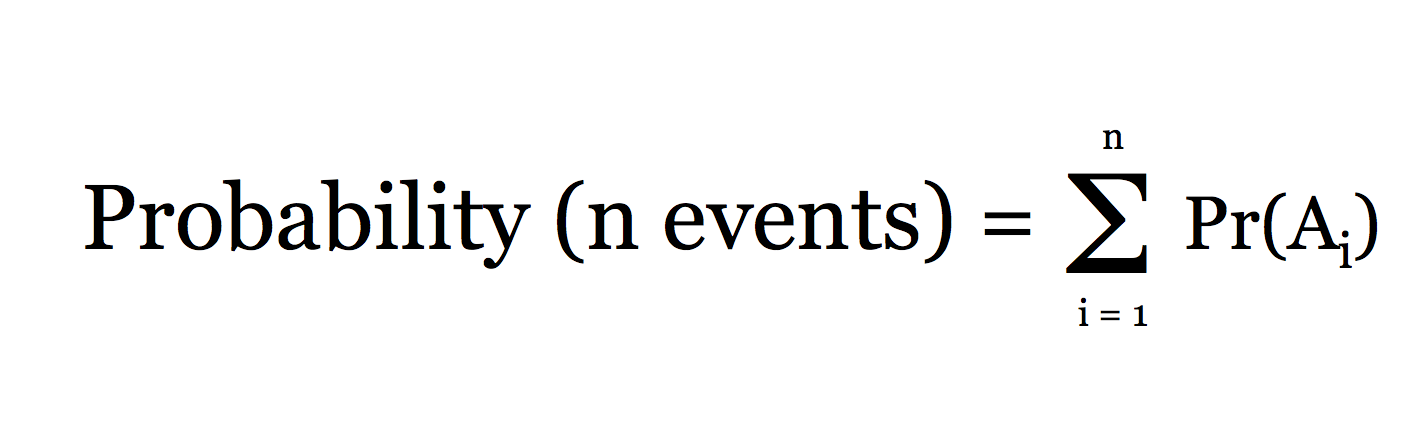
The Basic OR rule is that to calculate the probability that any one of a specified set of outcomes has occurred, you add together the probability of each outcome in the set.
The Basic OR formula for two events:
Pr(A OR B) = Pr(A) + Pr(B)
|
|
In the example of a die coming out even this would be Pr(2) + Pr(4) + Pr(6) = 1/6+1/6+1/6 = 1/2.
If you are dealing with multiple events or outcomes of a single event that are not mutually exclusive then you must apply the NON-EXCLUSIVE OR rule. Examples of these cases are dealt with on that page.
Table of Contents