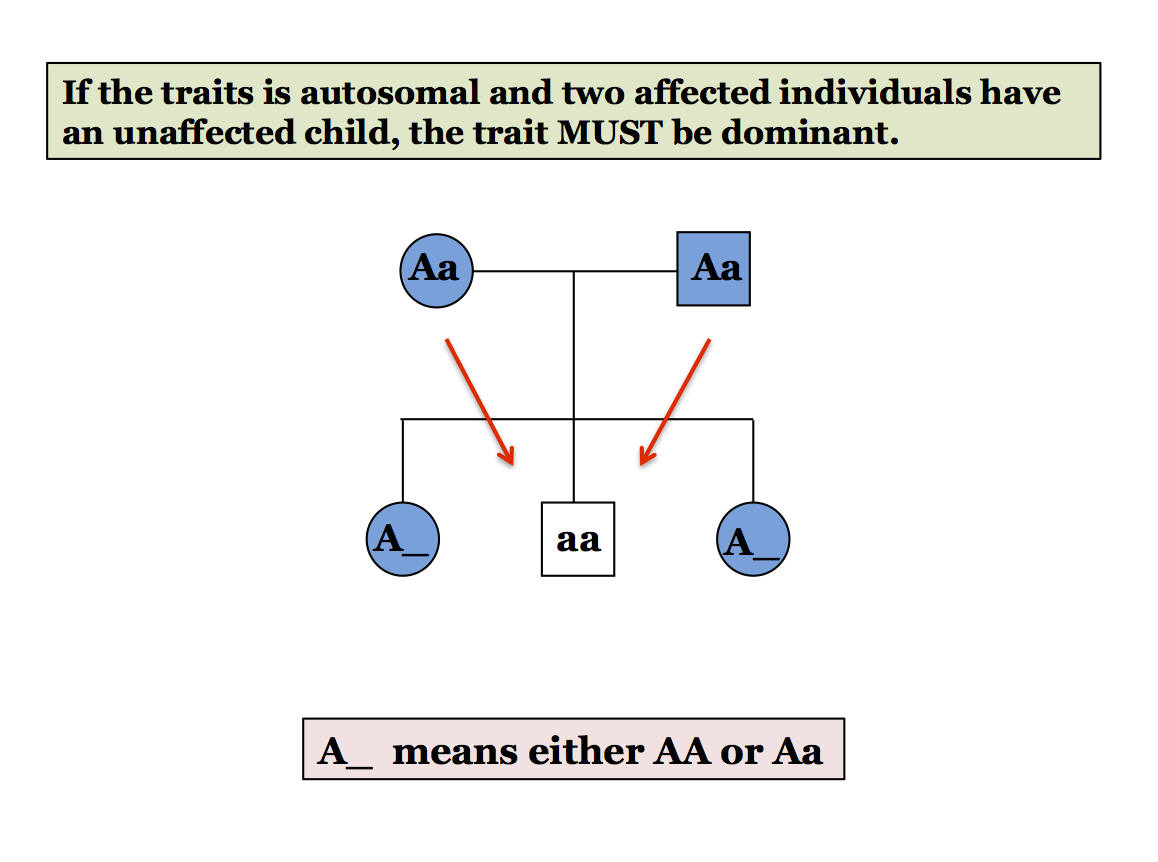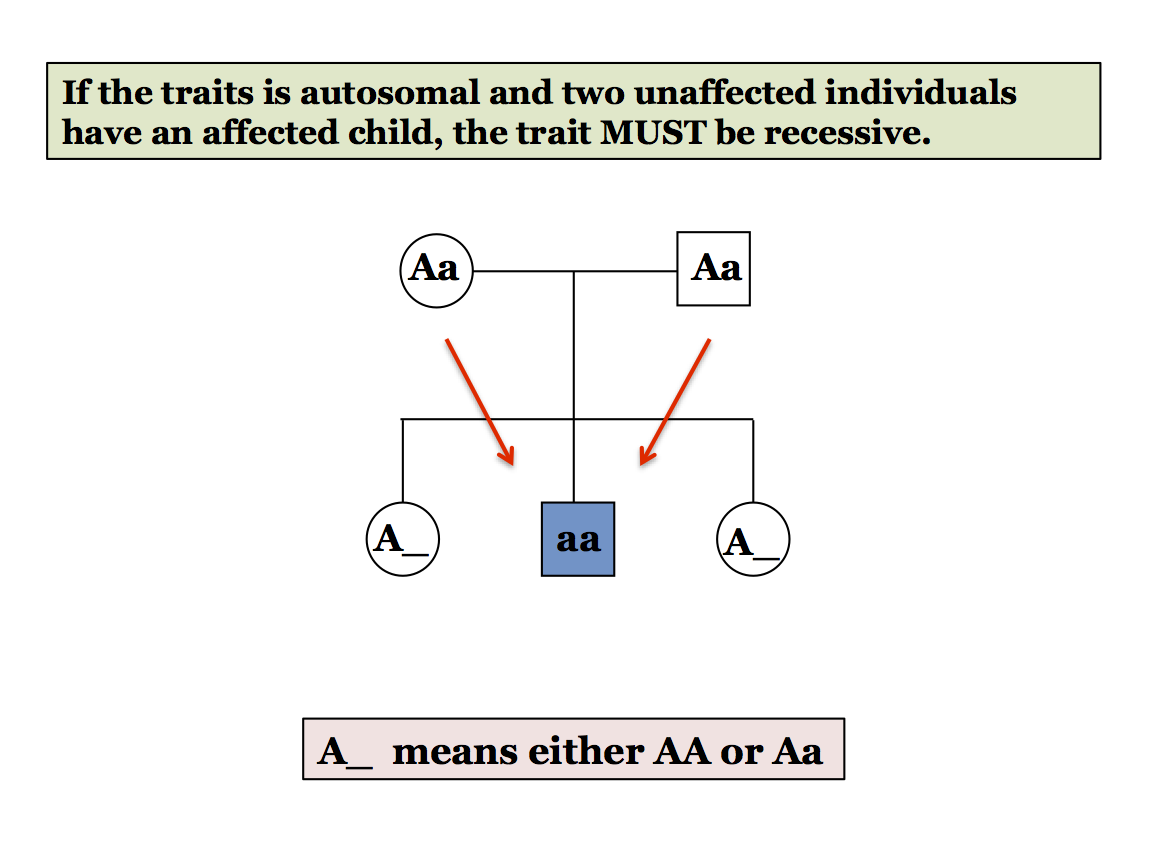
Decisive patterns for autosomal traits
You might already have figured out that there are certain patterns that allow you to immediately distinguish between autosomal dominant and autosomal recessive traits, with all of the other patterns being inconclusive. These decisive patterns are shown below.
Autosomal Recessive: The first diagram shows the basic
pattern that is indicative of a recessive trait - when two unaffected individuals have an affected child. When two unaffected individuals have an affected child then that child must have inherited a recessive allele from each parent and, therefore, each parent must be heterozygous. This is the pattern behind the common saying that recessive traits skip generations. It isn't so much that they necessarily skip generations, only that unaffected parents can have affected children.
|
|
Autosomal Dominant:Here we see the case that indicates that the trait is autosomal dominant - two affected individuals have an unaffected child. This is indicative of a dominant trait because if it were recessive then the two parents would both have to be homozygous (aa x aa) and so their child would necessarily be aa and, therefore, affected. So, the pattern seen here indicates two heterozygous parents (Aa x Aa) with an unaffected (aa) child.
|
|