Eukaryotic Transcription Elongation
| Eukaryotic Transcription | Table of Contents |
The process of polymerization is very similar to the process in E. coli but there are some interesting differences.
RNA Polymerase Pausing in Metazoans
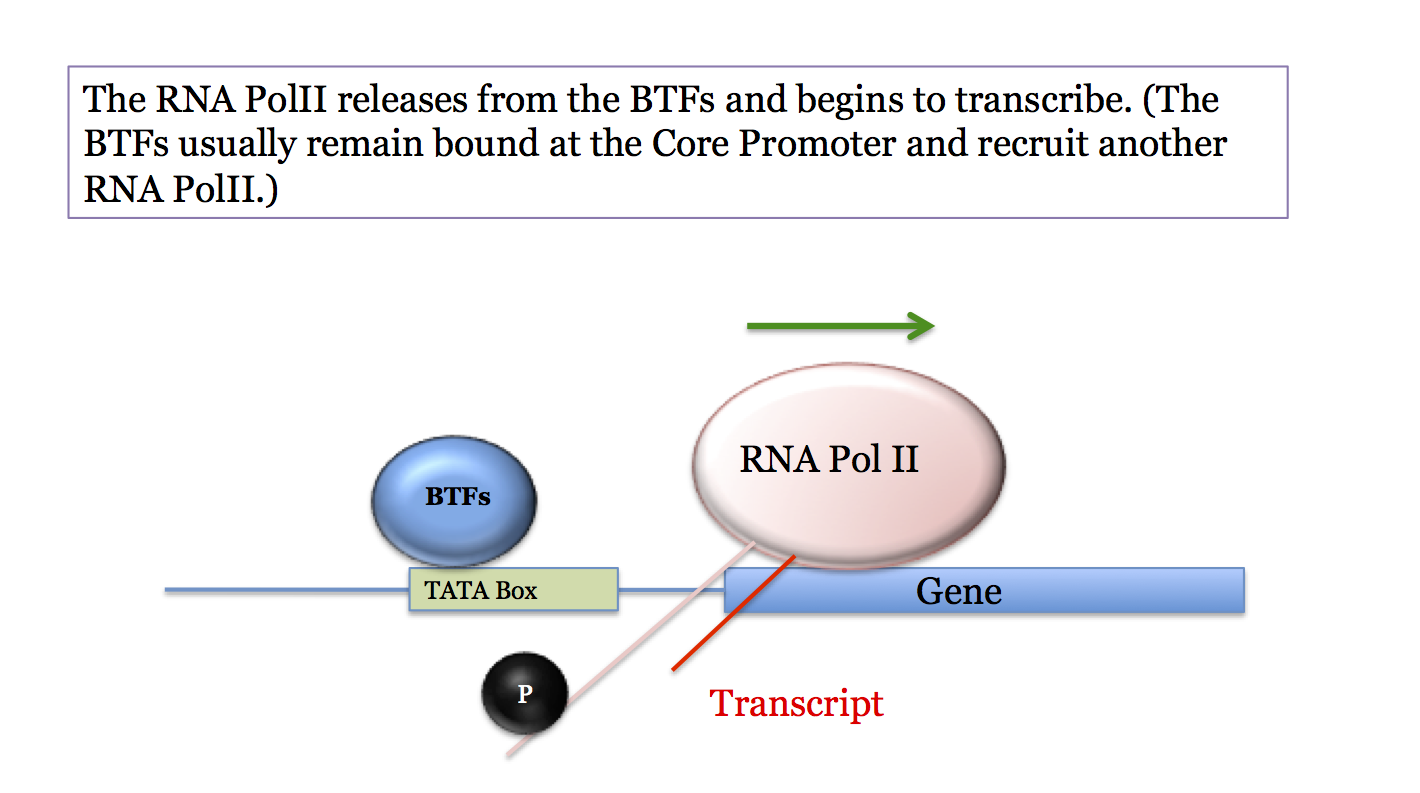
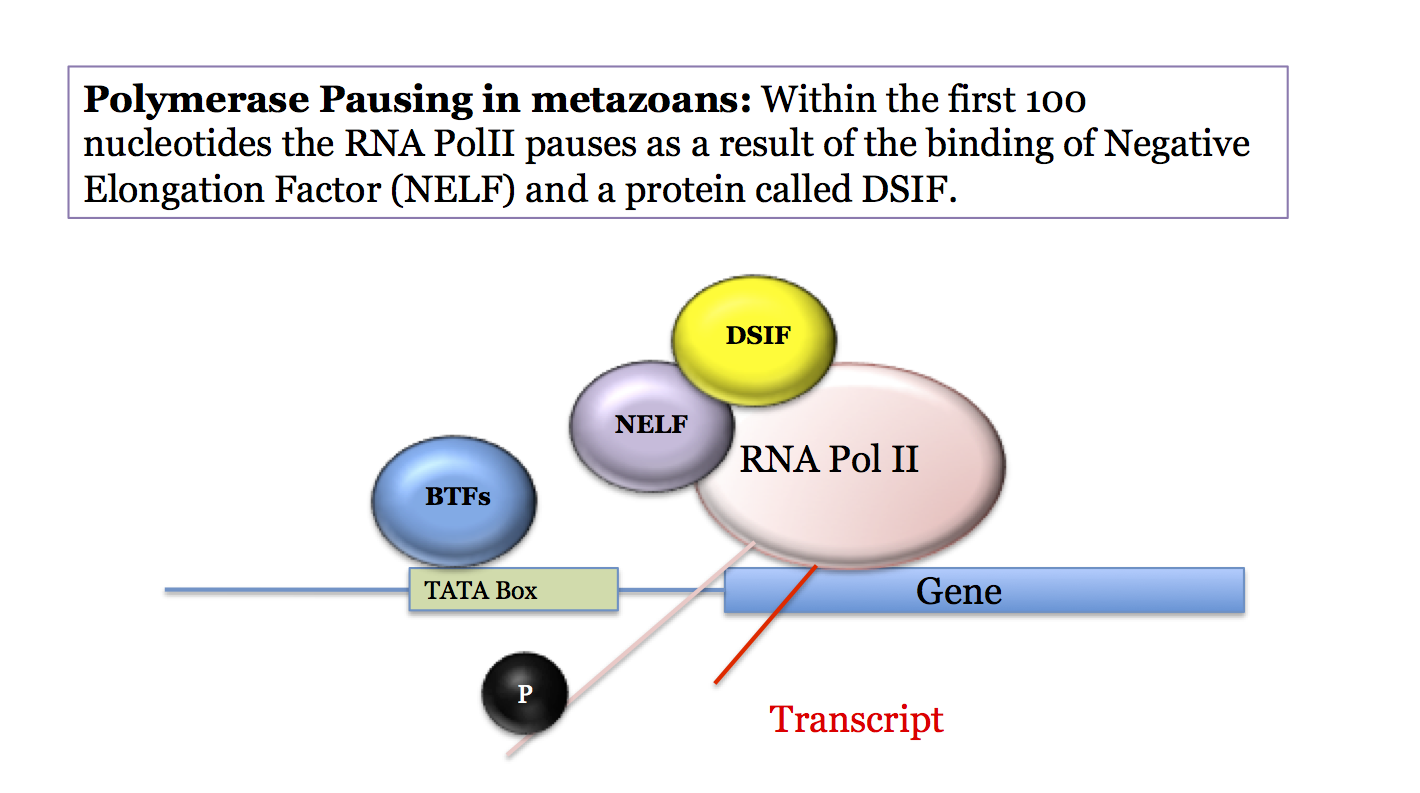
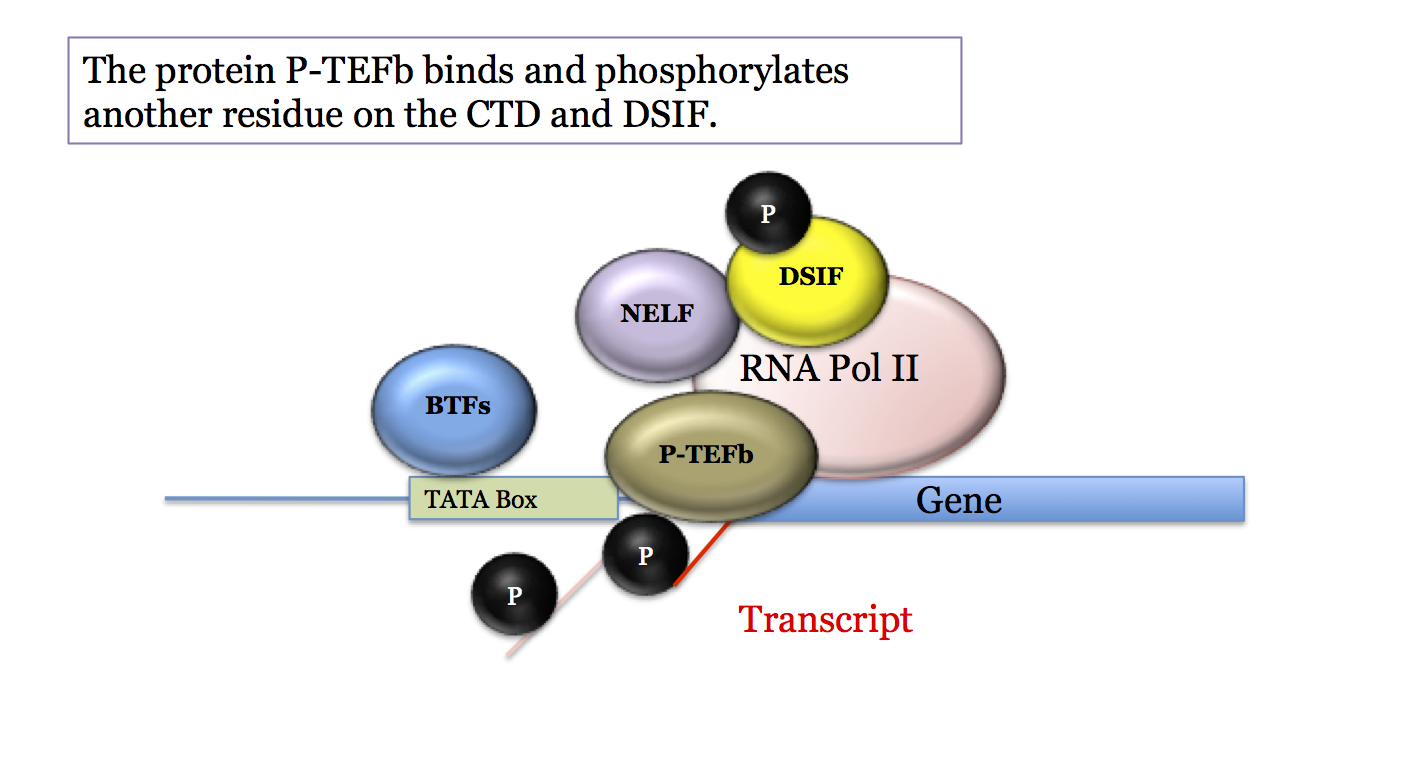
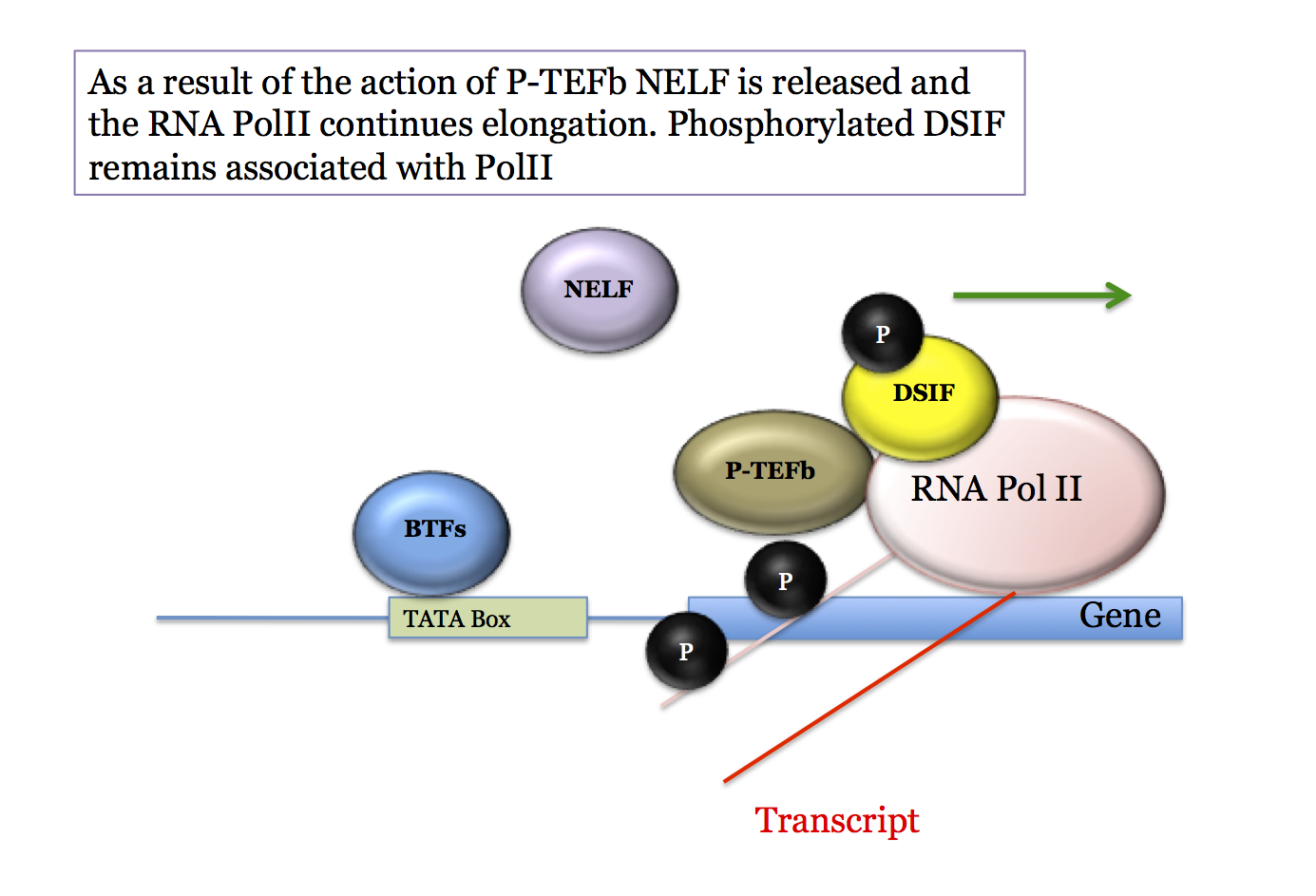
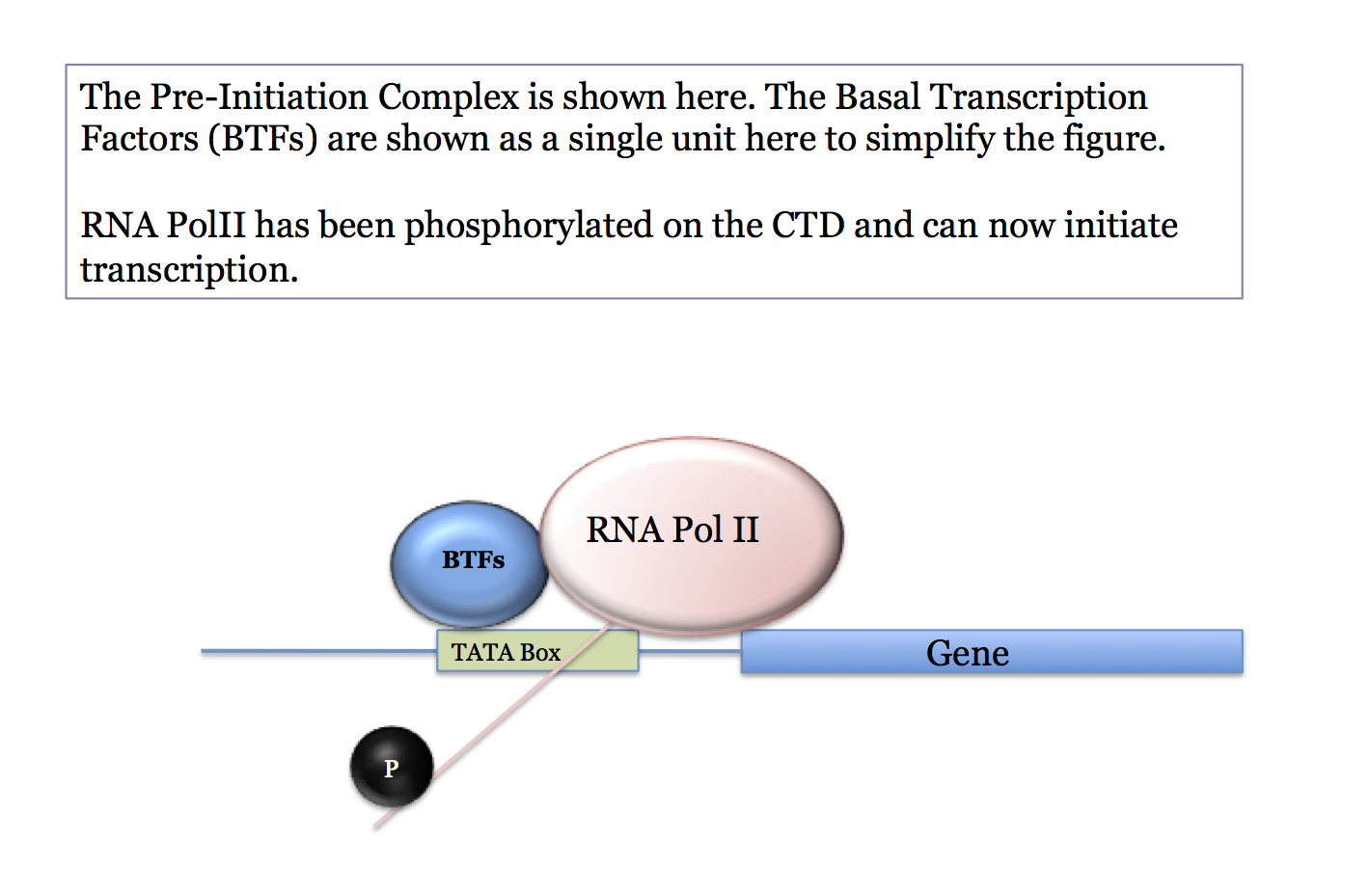
One difference is that in metazoans (but not other lineages such as yeast) RNA PolII pauses shortly after initiation (within the first 100 nucleotides). Although the mechanism is not entirely clear, the evidence is that the Mediator Complex plays an important role in this pausing so it must remain in contact with PolII after initiation. The Polymerase remains paused until it gets phosphorylated by the NELF protein and it is then released to continue transcription.
|
|
|
|
|
|
|
|
|
|
The exact reason for this pausing are uncertain but there is good evidence that it plays an important role. It could be that this offers another level for cells to regulate the process. There is also some evidence that the pausing help to keep the promoter region free of nucleosomes so that more transcription can occur. Although the reasons for the pausing are not clear it is certainly an important aspect of transcription in metazoan lineages.
Transcription Elongation Factors
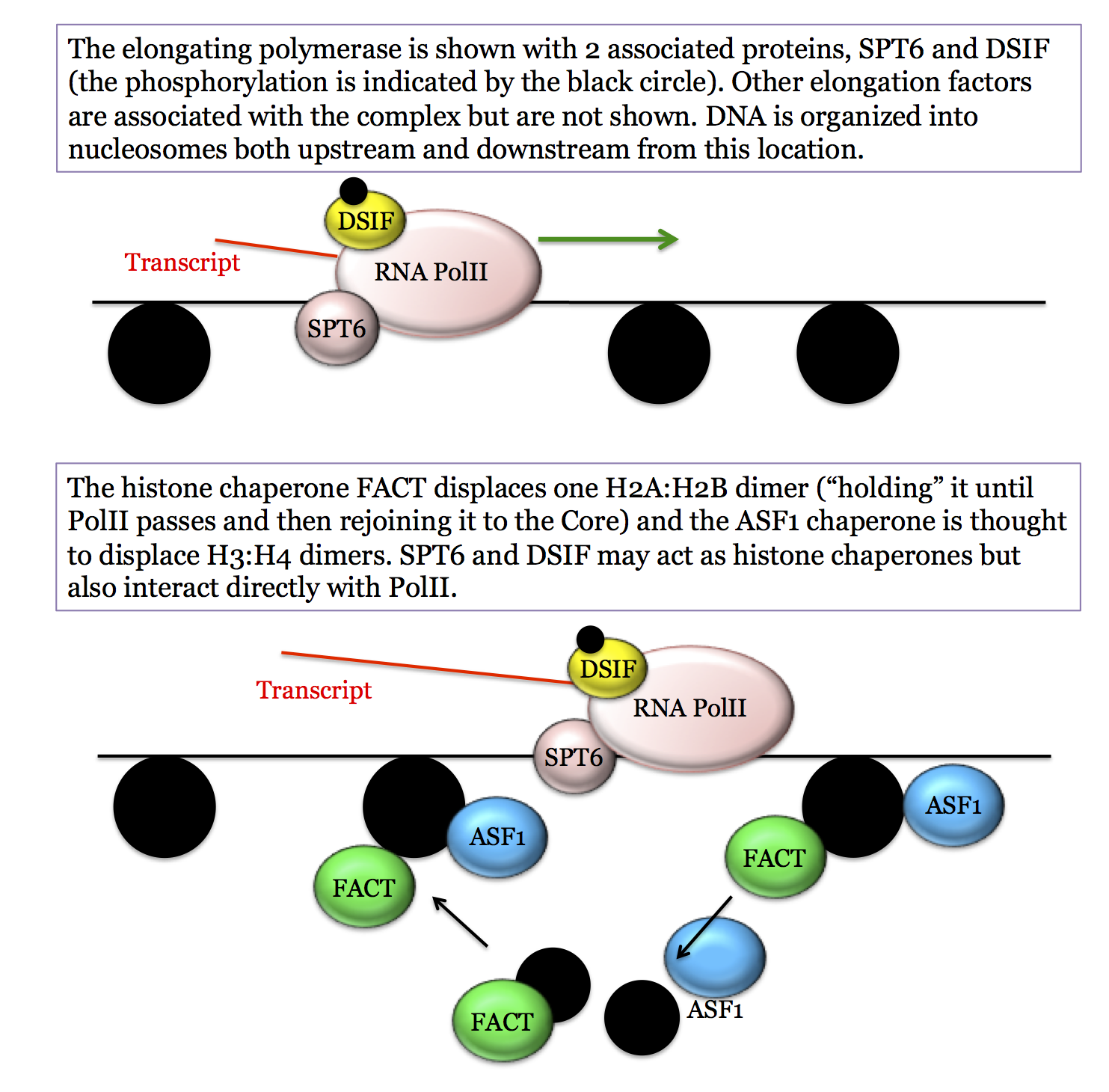
Once RNA polII has started to elongate and the CTD has been phosphorylated a number of proteins bind to the complex and play a role in the elongation process. These proteins are called elongation factors (not to be confused with Translation Elongation Factors!). One of these, P-TEFb (Positive Transcription Elongation Factor b) is shown in the figures above. Another is SPT6, shown in the figure in the next section. A number of other factors have been identified although the role of each is not known and we will not cover them further here.
Transcription and Nucleosomes
An important general feature of eukaryotic transcription is the need for eukaryotic RNA polymerases to deal with the organization of DNA into nucleosomes. Dealing with this structure involves the action of a number of histone chaperones which can displace histones from nucleosomes just ahead of the RNA polymerase and then facilitate the reformation of nucleosomes just behind it. This is illustrated below.
|
|
| Eukaryotic Transcription | Table of Contents |