The NON-EXCLUSIVE OR rule
As dealt with elsewhere the Basic OR rule is applied when you want to know the probability that any one of a specified set of mutually exclusive outcomes has occurred for a single event. For example, what is the probability that you roll a 1 or a 2 on a die? These are mutually exclusive: obviously the die cannot be both a 1 and a 2!
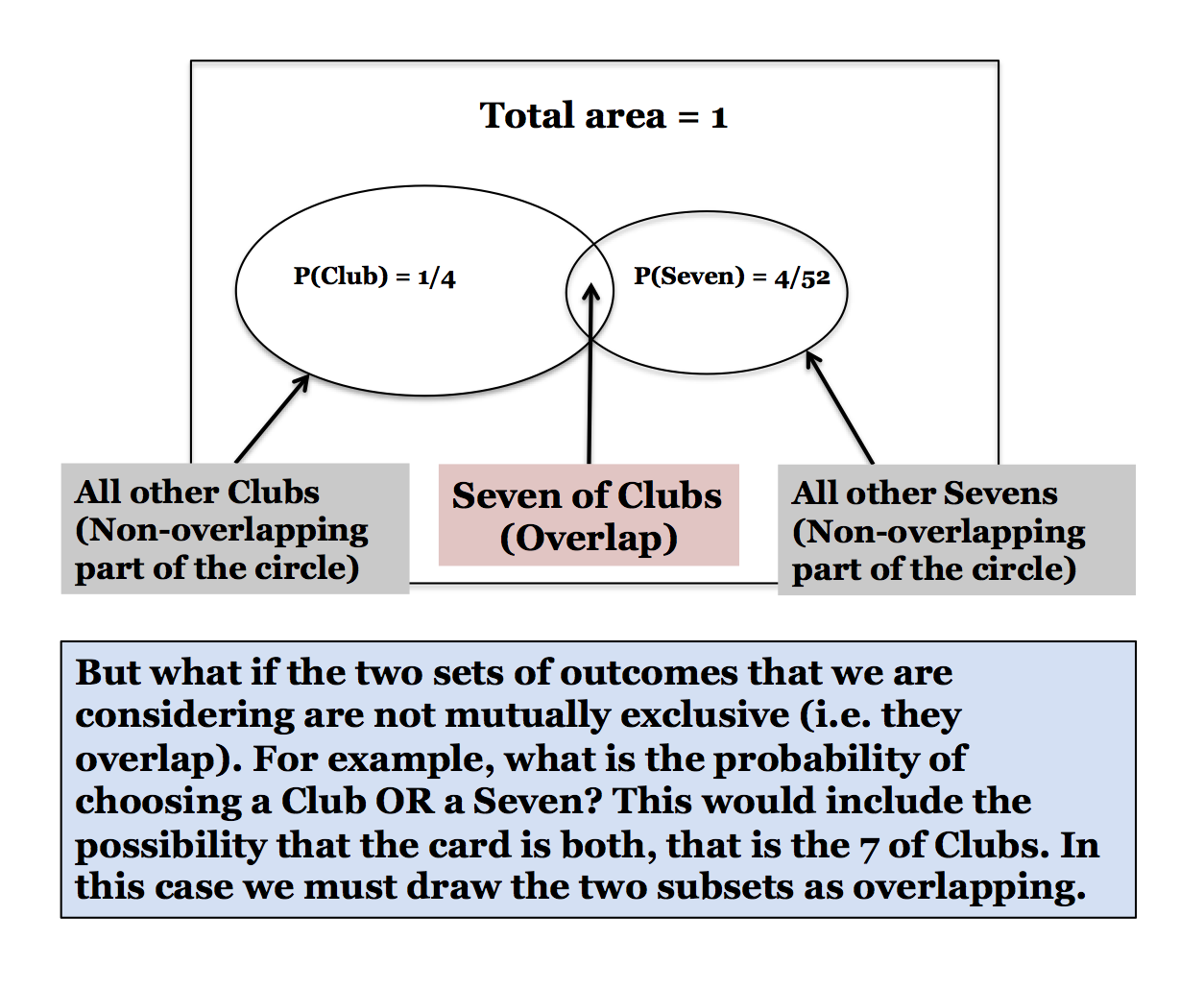
There are some situations, however, when we need to deal with a set of outcomes that can co-occur because they are NOT mutually exclusive. This is often the case when you are dealing with multiple events but it can also be the case for single events in certain circumstances. To illustrate the idea, consider these two questions:
1. If you roll two dice, what is the probability that either of them (or both) is a 3?
2. If you select a card at random what is the probability that it is either a Club or a seven (or both).
In both cases you are asked about the probability that either outcome A OR outcome B (or both) occurs. (I have taken care to indicate the (or both) because it is sometimes just implied. However, emphasizing this makes it clear that you need to consider the fact that the two outcomes can co-occur.) In both of the questions outcome A is not mutually exclusive from outcome B - they can both occur. Both dice could be 3 or the single card could be the seven of clubs.
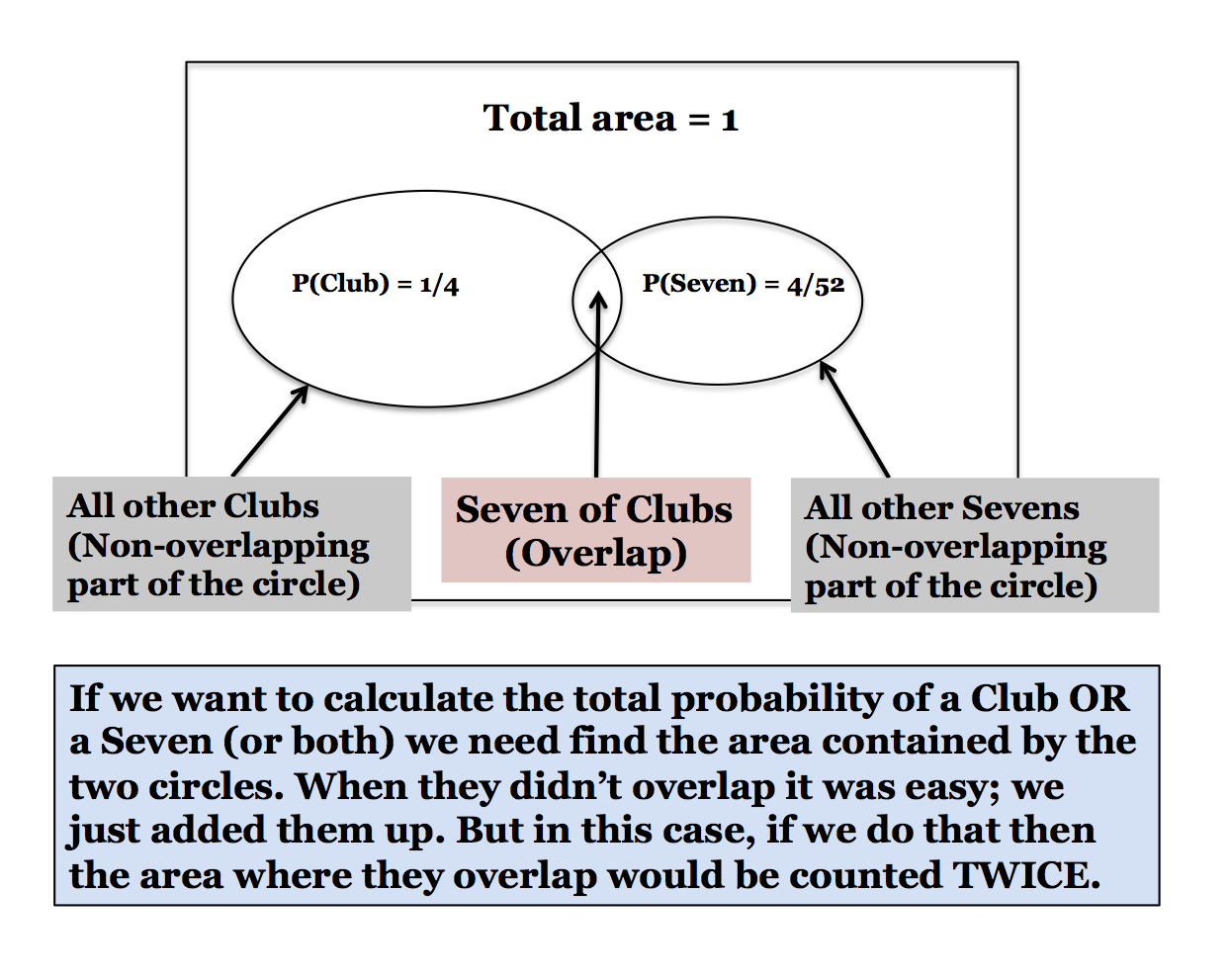
When the outcomes are not mutually exclusive we cannot just add the probabilities (the Basic OR rule). Instead, an alternate form of the OR rule applies which we are calling the Non-Exclusive OR rule. This rule is that the overall probability is the sum of the probabilities for each outcome minus the probability of the outcomes co-occurring.
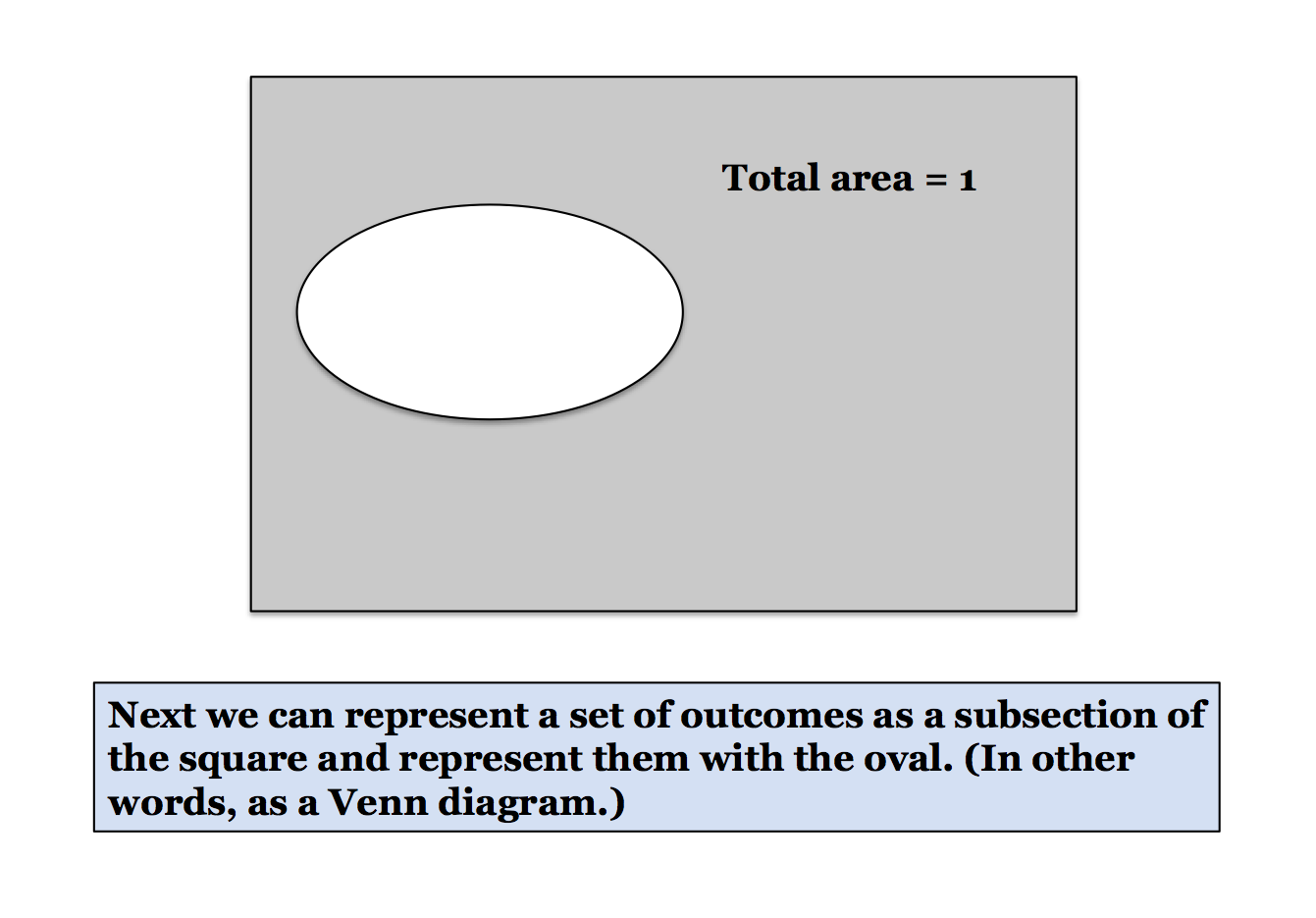
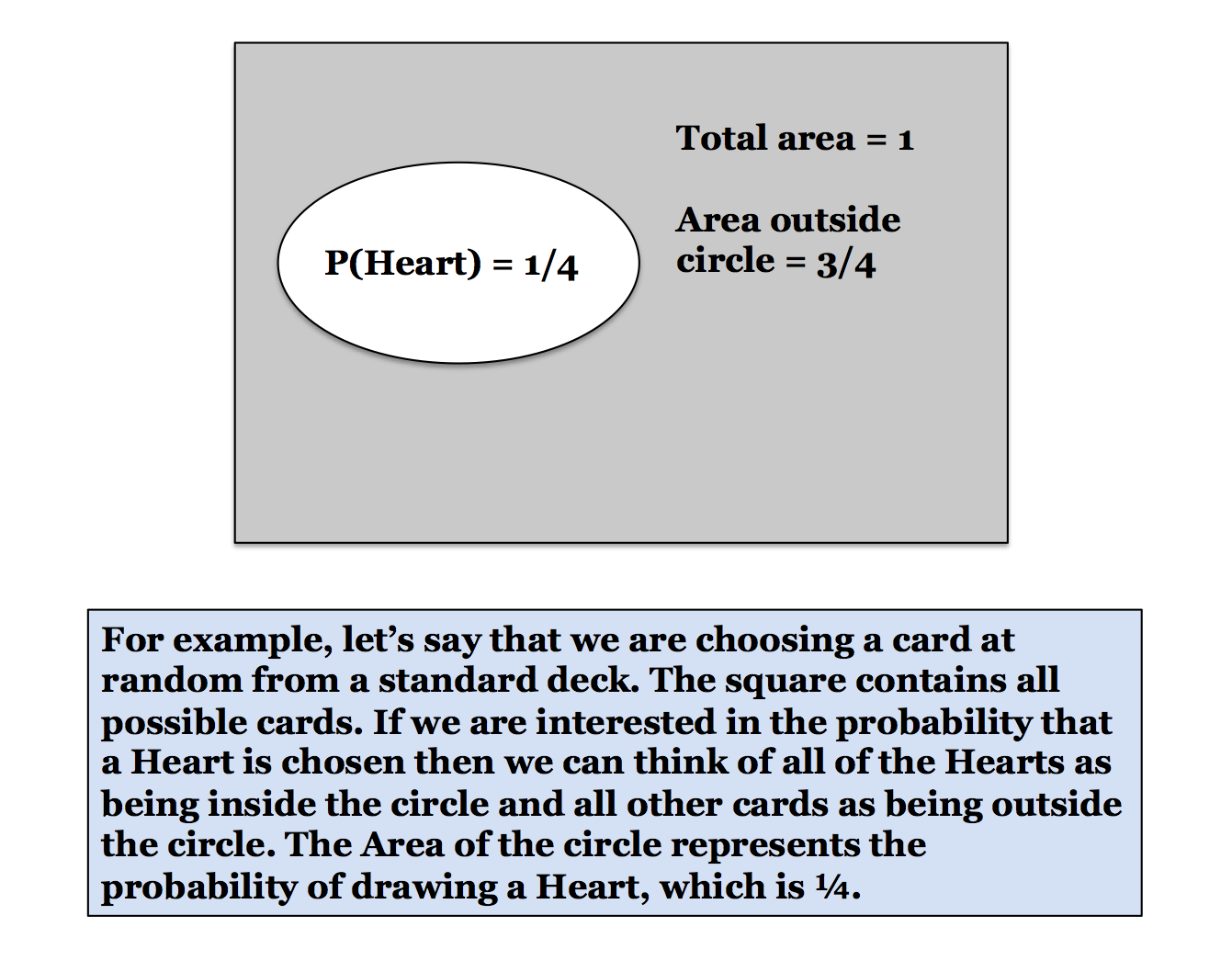
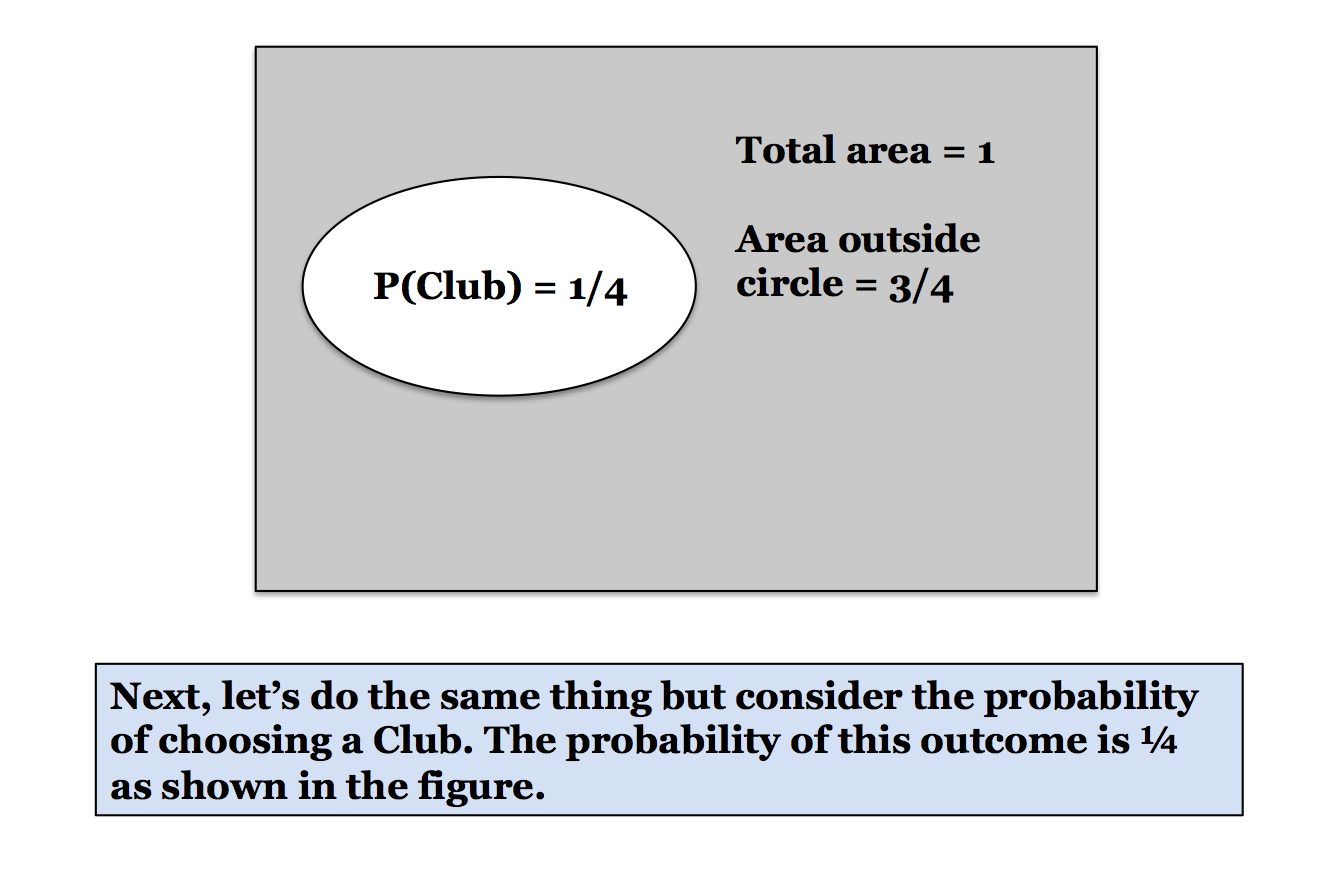
The following figures go through this rule and a formula that can be used in the case of two (but not in cases of more than two) non-exclusive outcomes.
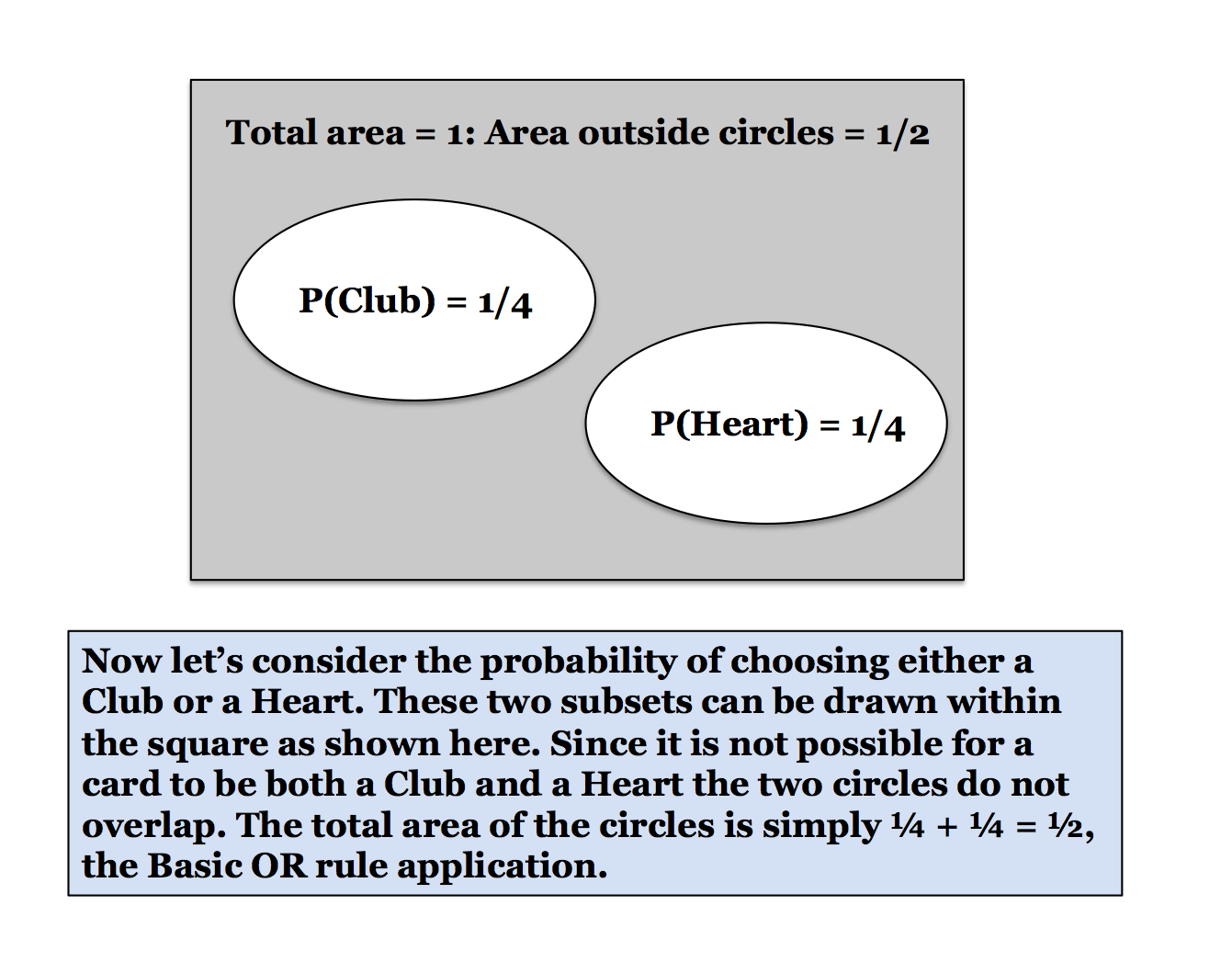
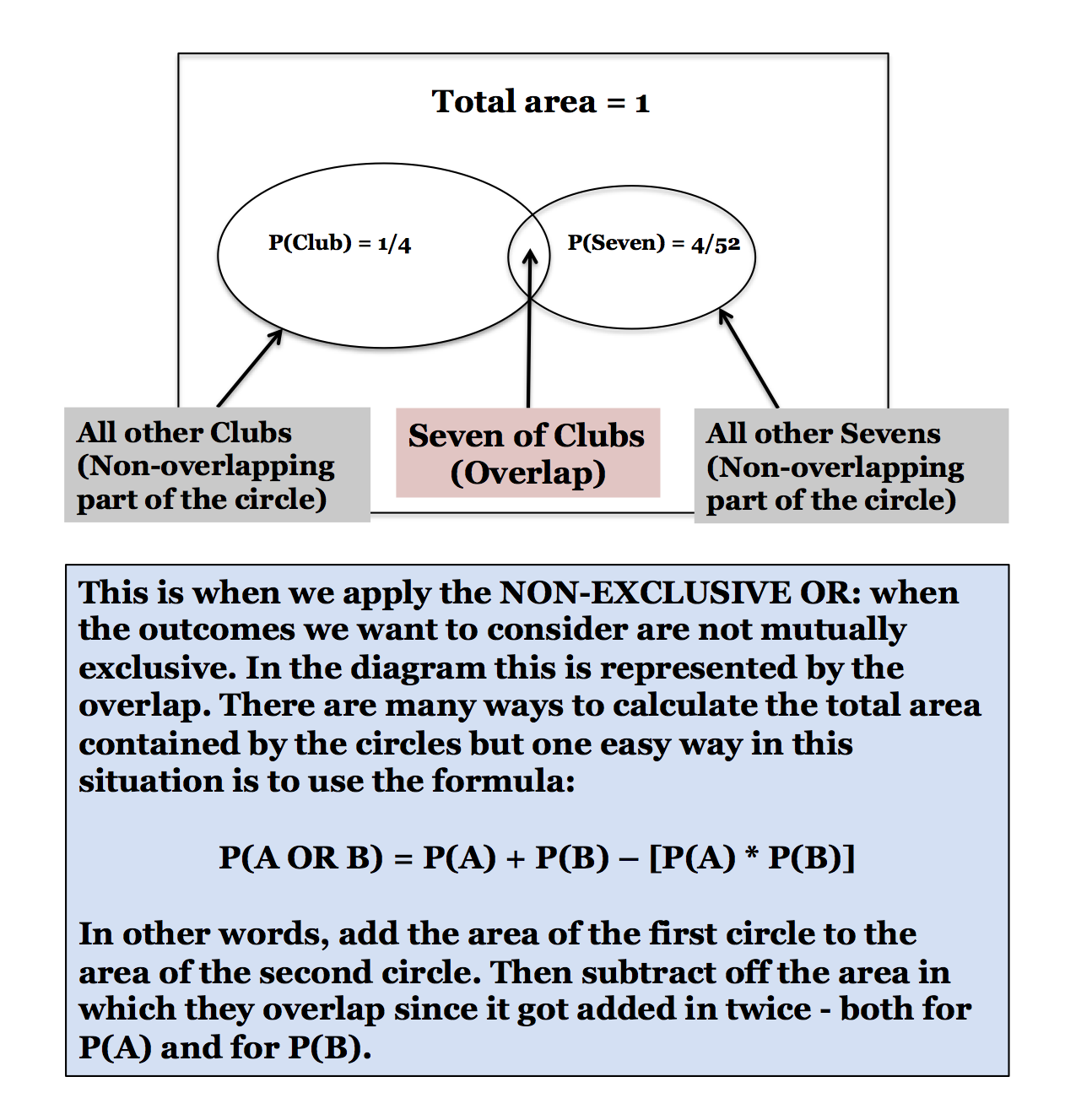

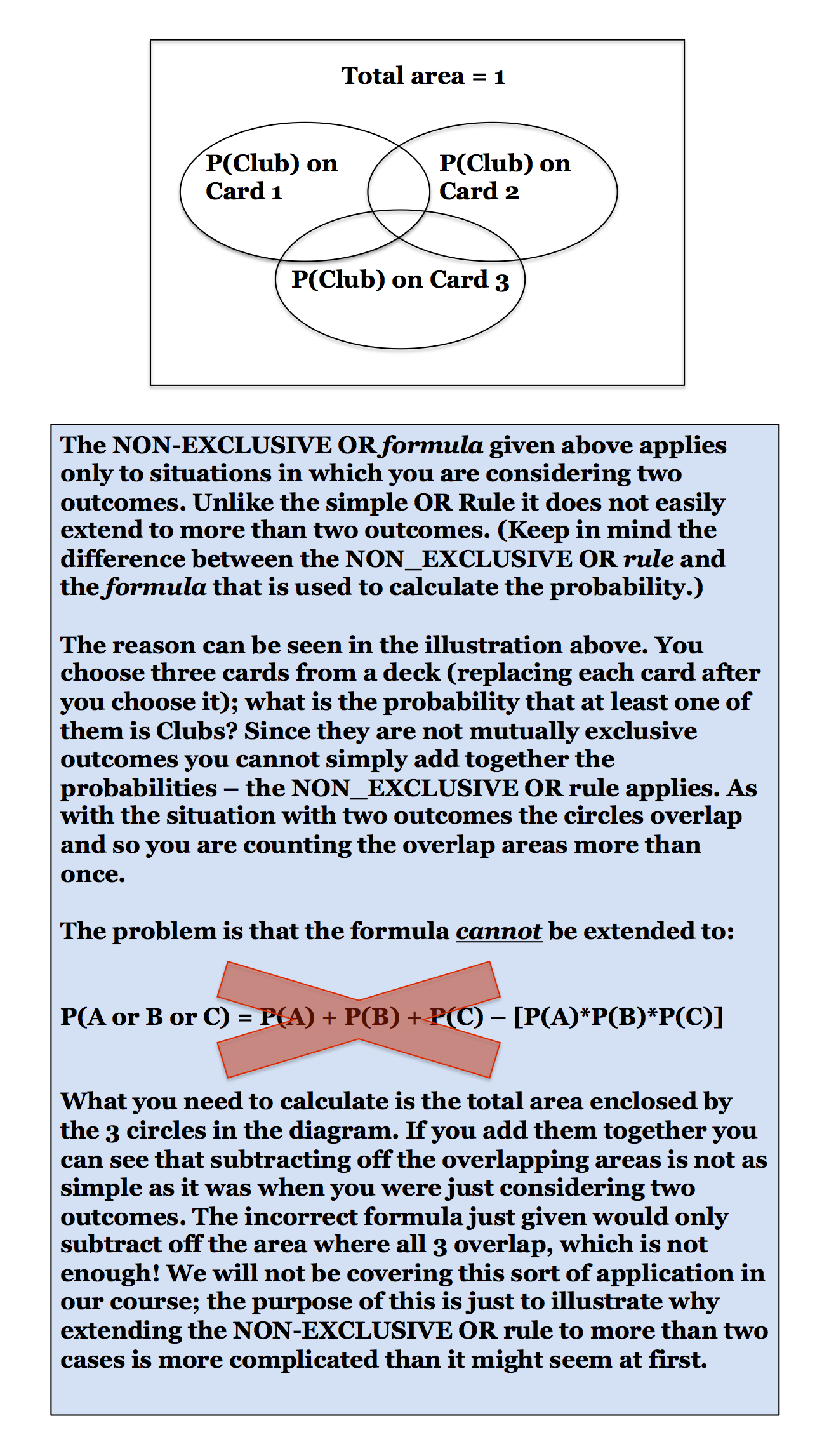
Now we can look at something that was mentioned on the page about the Basic OR rule. This is the fact that the Basic OR rule is really just a subset of the Non-Exclusive OR rule. If you look at the formula for the Non-Exclusive OR rule when there are two outcomes you can see that when events are mutually exclude P(A)*P(B) = 0 and so the probability of A OR B is just P(A) + P(B), which is the Basic OR formula.
Table of Contents