Labeling a Pedigree
A pedigree is an observation, just as progeny ratios are an observation of the results of a cross. A major goal of pedigree analysis is to develop a hypothesis (i.e. mode of inheritance) that is consistent with the inheritance pattern you observe in the pedigree. (You might find in some cases that more than one model is consistent, which is fine.) The best way to approach this is to first eliminate modes of inheritance that are inconsistent with what you observe. An important skill in rejecting inconsistent models is labeling a pedigree, which involves filling in whatever you can infer about the genotypes of all individuals possible. In this section we will only be concerned with AUTOSOMAL models, which do not require you to distinguish between male and female genotypes. We will add other modes of inheritance throughout the course.
The pedigree below is labeled for two models,
autosomal dominant (a dominant mutation causes the trait) and autosomal
recessive (a recessive mutation causes the trait). To label a pedigree, you
first choose the model you are using (basically, you can start with dominant
and then try recessive or vice versa). Then, following the model under consideration, fill in the
genotypes of those you know based on whether or not they are affected. Then fill in the others based on what you can infer given the
alleles that must be inherited by the known individuals.
|
|
|
|
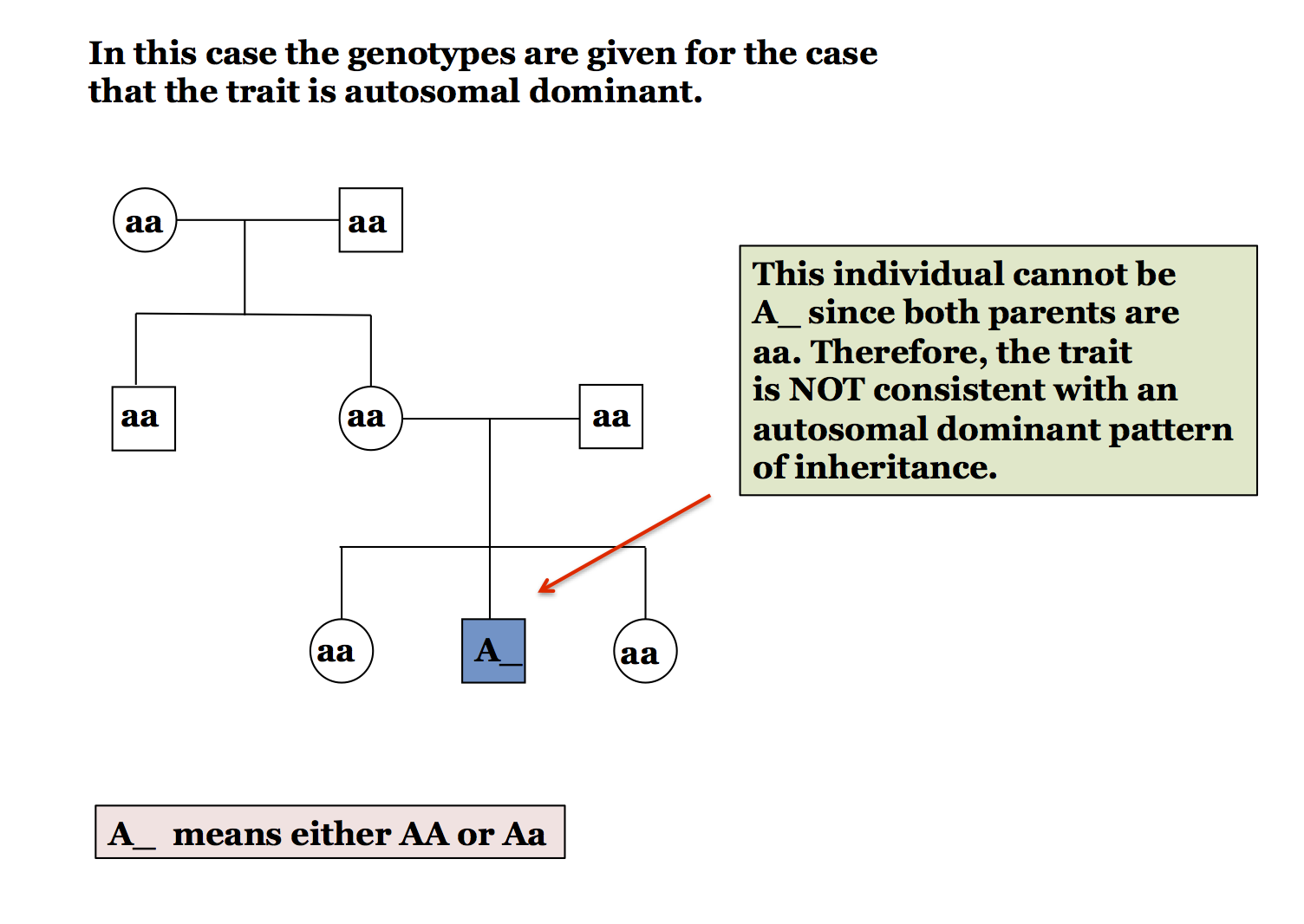
Notice that the autosomal dominant model cannot account for the
observed phenotypes. Since the individual III2 is shaded he must be A_ (AA or
Aa). However, both parents are unaffected and thus are genotype aa. If this were the case
then III2 would have to be aa. This inconsistency means that we can reject
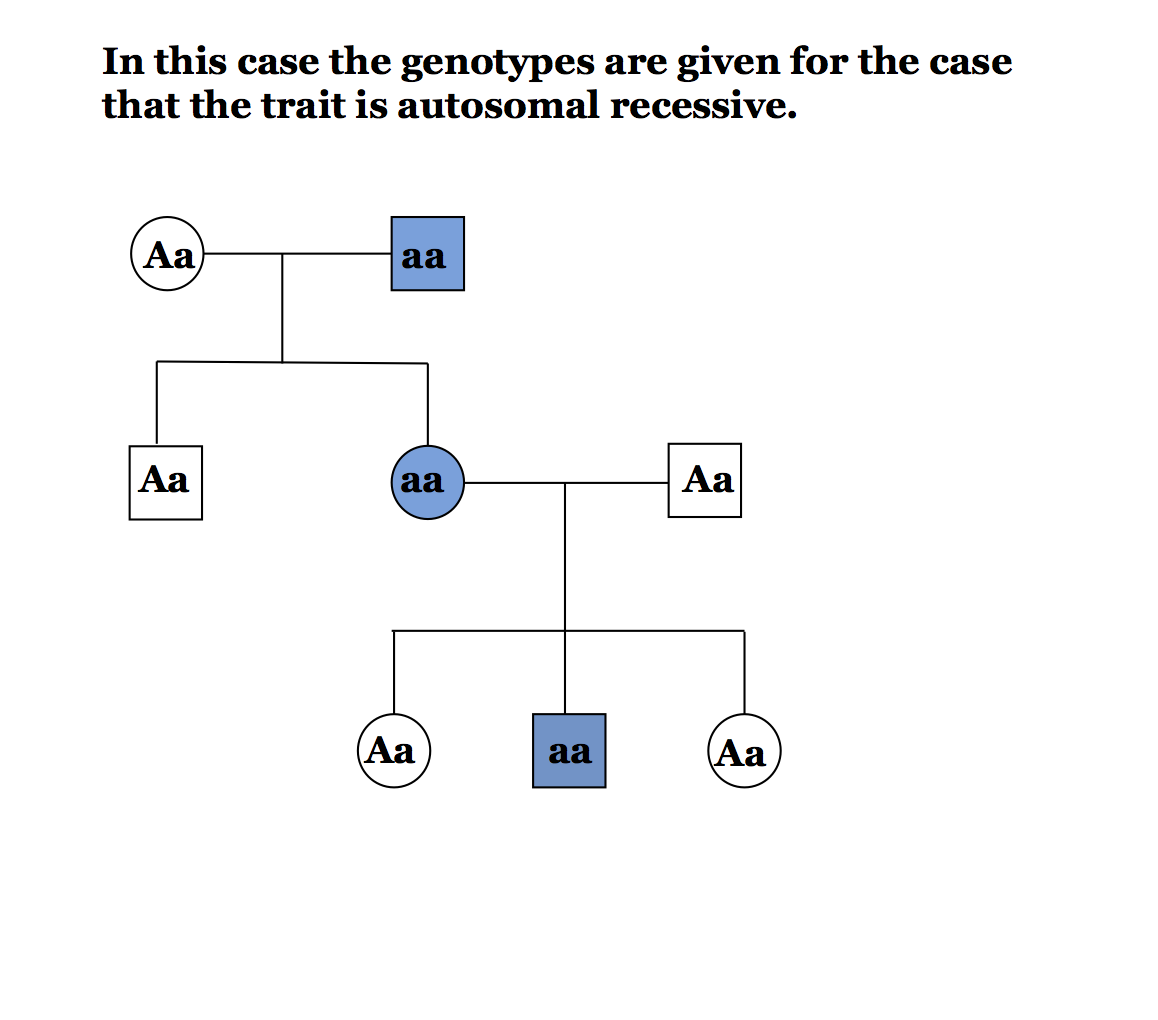
this model. On the other hand, since the pedigree is consistent with an
autosomal recessive trait, as shown by the labeling in the figure,
we can conclude that the trait is autosomal recessive.
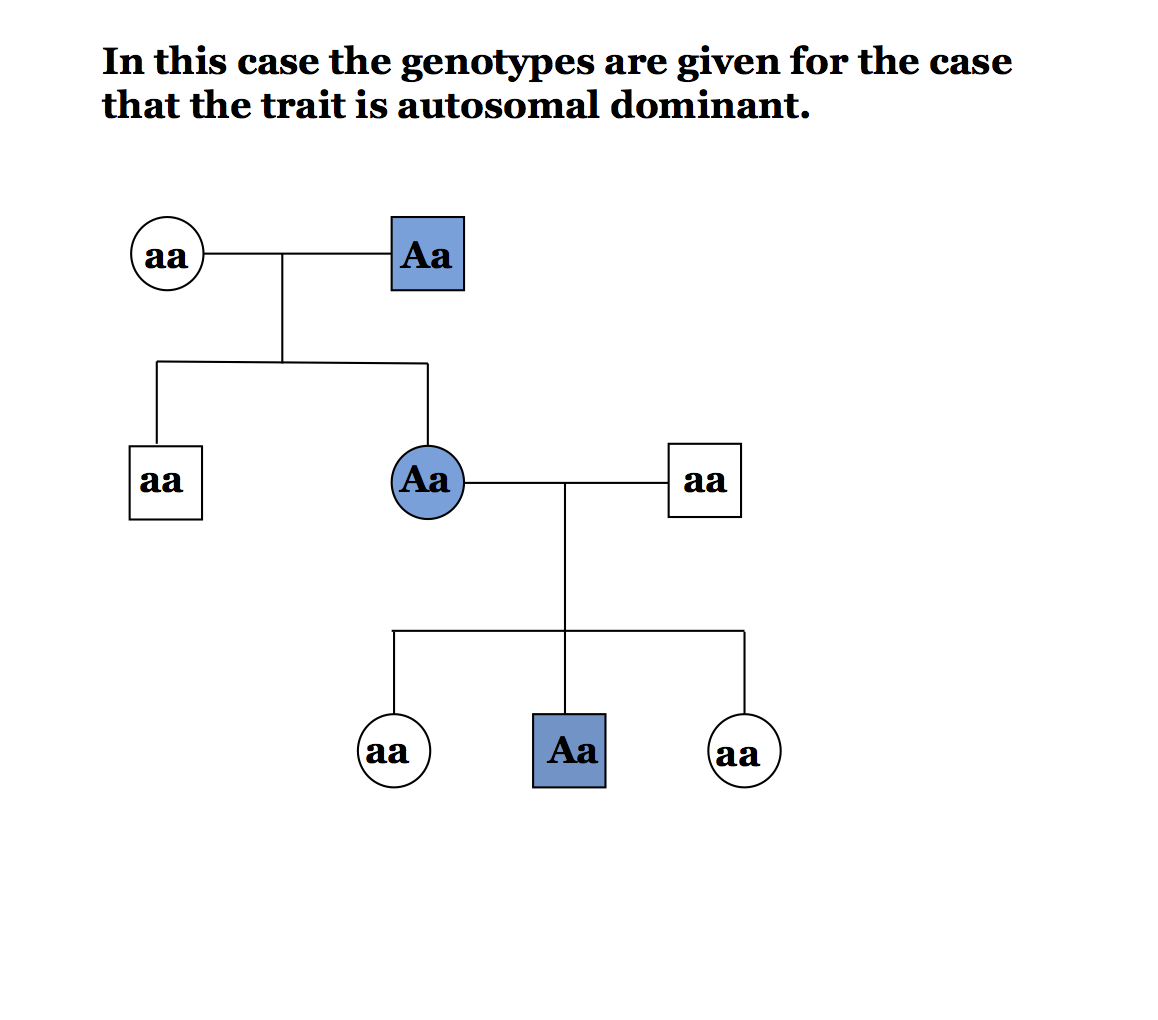
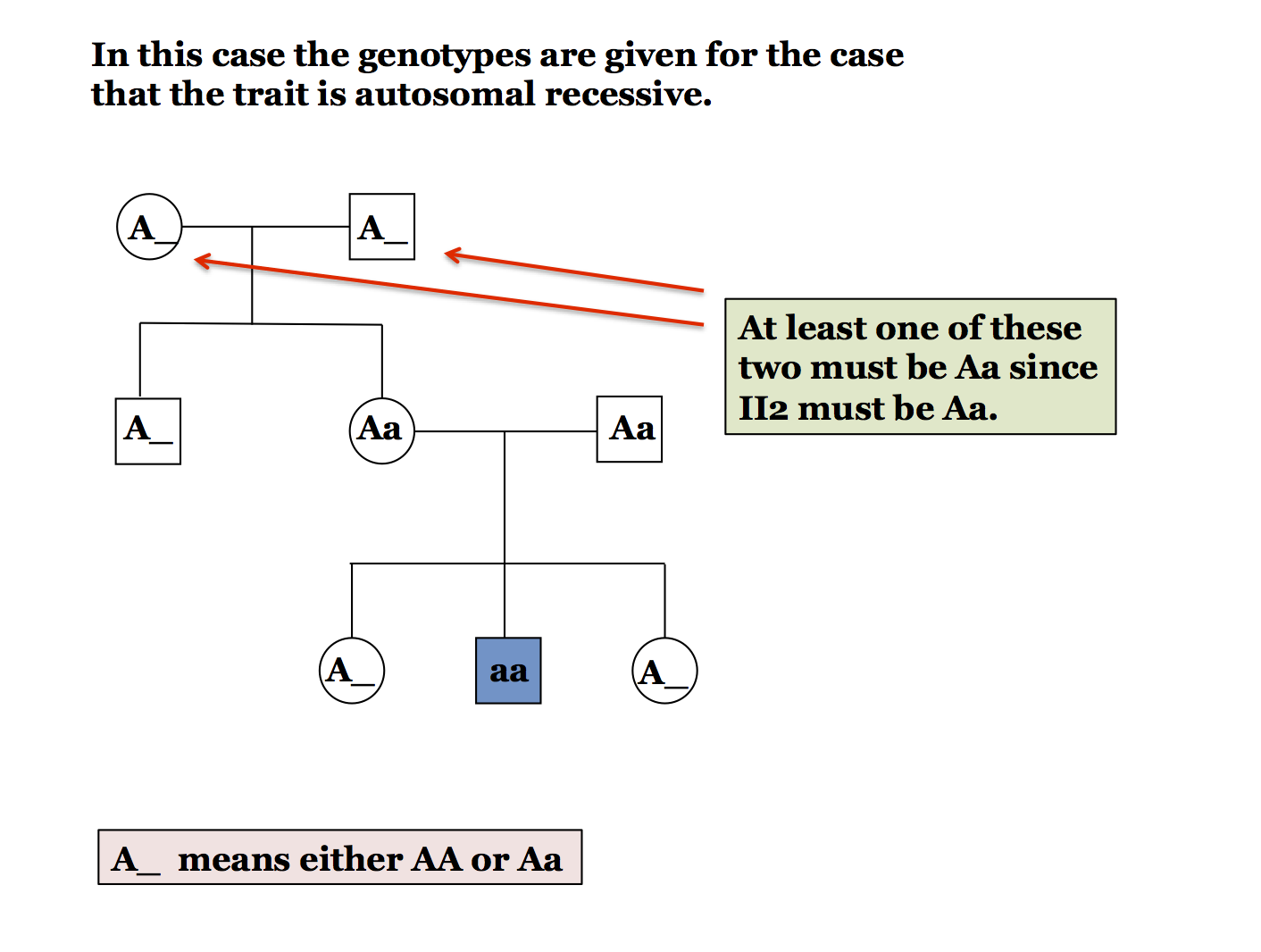
It is also possible that a pedigree is consistent with both models as shown in the next example.
|
|
|
|
In such cases, the pedigree does not allow you to infer a mode of inheritance and you can simply state that the evidence is not conclusive.