Xw
Xw
X+

Y
Reciprocal Crosses
A reciprocal cross is the classic method to determine if the inheritance of a recessive trait is X-linked. A reciprocal cross actually involves two separate crosses in which the parents from two true-breeding strains are interchanged.
The two crosses that make up a reciprocal cross are:
1) Male wild type x Female mutant
2) Female wild type x Male mutant
Mendel had actually performed reciprocal crosses but did not discover anything related to sex linkage and so we did not discuss it. However, as people extended Mendel’s work they stumbled upon some interesting findings that led to the discovery of sex linkage. This in turn helped to prove the theory that genes were parts of chromosomes.
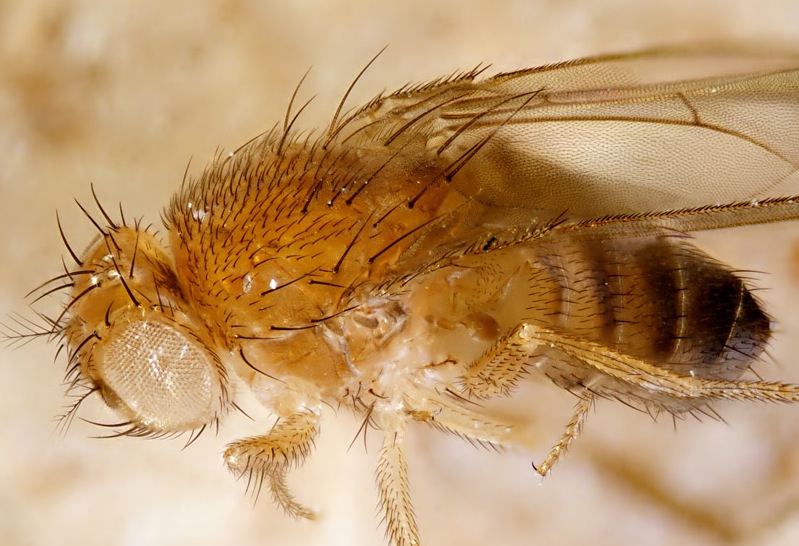
As an example, consider the classic experiment performed by Thomas Hunt Morgan on Drosophila eye color. This was the cross that led Morgan to develop the concepts we use today to study sex-linked traits two phenotypes: one phenotype is the wild type red eye color and the other a recessive white eye color that a student of his had discovered.
The two crosses that would make up the reciprocal cross in this experiment were:
1) male (wild type red eyes) x female (mutant white eyes)
2) female (wild type red eyes) x male (mutant white eyes)
Here we are going to proceed using a modern perspective on what we know about sex linkage. However, keep in mind that Morgan was in the process of discovering these ideas and developing the terminology we use!The question asked in a reciprocal cross is whether or not males and females produce gametes that carry - as far as the trait in question is concerned - the same genetic information (same gene content). In an XX:XY sex-determination system such as what exists in Drosophila, Y-bearing sperm do not contain genetic information for X-linked traits and are therefore different from X-bearing sperm. This is why male Drosophila are referred to as heterogametic. On the other hand, all eggs have the same chromosomal content (so female Drosophila are homogametic).
This means that if a recessive trait is X-linked, a female with the recessive trait (Cross 1 above) will produce males that are hemizygous for the recessive allele. Hemizygous means that they carry only a single copy of the gene and in this case the copy will the recessive allele since they must inherit their X chromosome maternally. As a result the male progeny from this cross will display the recessive trait. On the other hand, Cross 2 will just yield Dominant progeny - can you see why?
Xw |
Xw |
|
X+ |
|
|
Y |
|
|
In the case of an autosomal trait, both crosses will yield only progeny with the Dominant trait. This difference allows geneticists to distinguish autosomal and X-linked recessive traits by observing the progeny of a reciprocal cross. If you see mutant male progeny from the cross involving a mutant female parent then you have evidence for an X-linked trait.