Recessive Epistasis
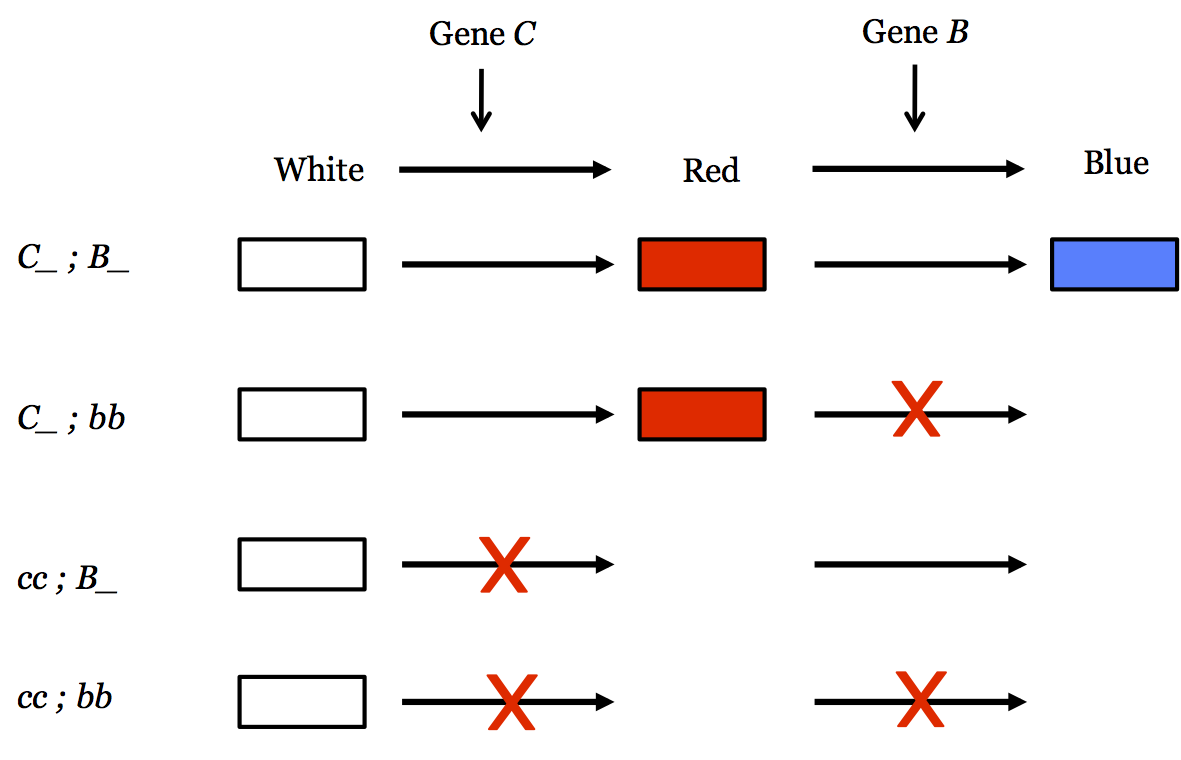
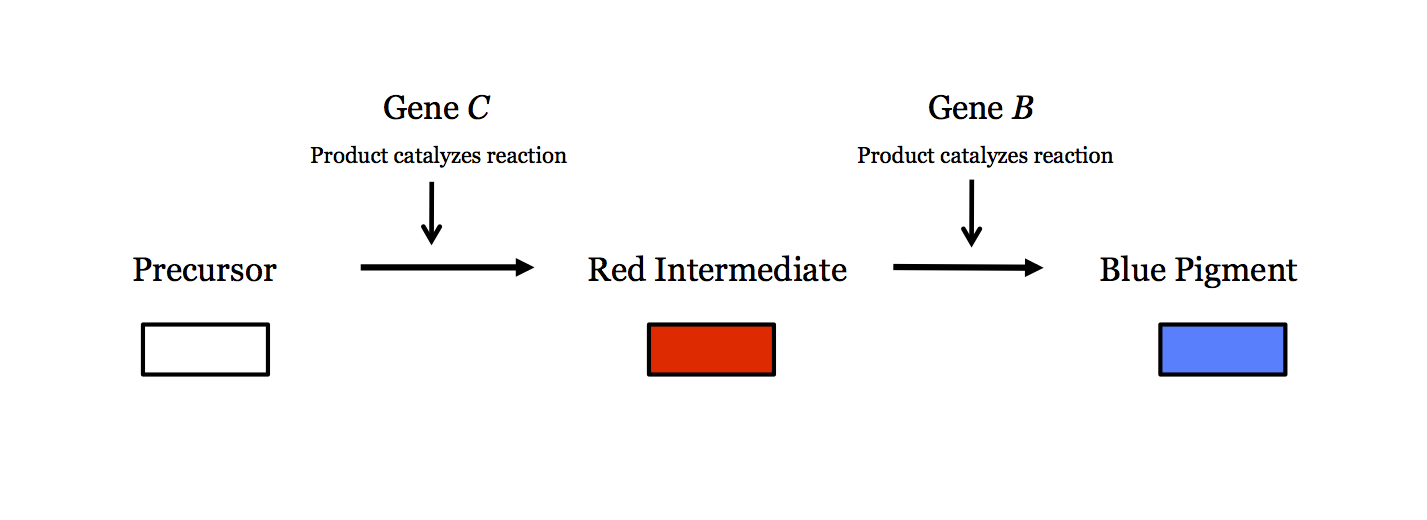
Recessive epistasis is a type of gene interaction in which one gene produces a phenotypic effect that masks the effect of another gene. For example, consider the simplified pathway for plant pigments and alleles that is shown here:
|
|
Let's say that the C gene has an allele, c which codes a loss-of-function allele. As a result, individuals with the genotype cc do not produce any functional enzyme and the first step in the pathway is never catalyzed.
When the first reaction is not catalyzed, then there is no substrate for the second reaction. The overall result is that no pigment is produced and so a cc individual will have a white flowers. No matter what genotype an individual has for the B gene it is irrelevant, the cc genotype produces a white flower and this masks a genotype effect of B: the action of the B gene (no matter what allele) depends on there being substrate available.
|
|
In the example given, the C gene is epistatic to the B gene. Since the recessive trait of the C gene (the c allele) is the one that produces an effect that masks the effect of B gene, it is recessive epistasis.
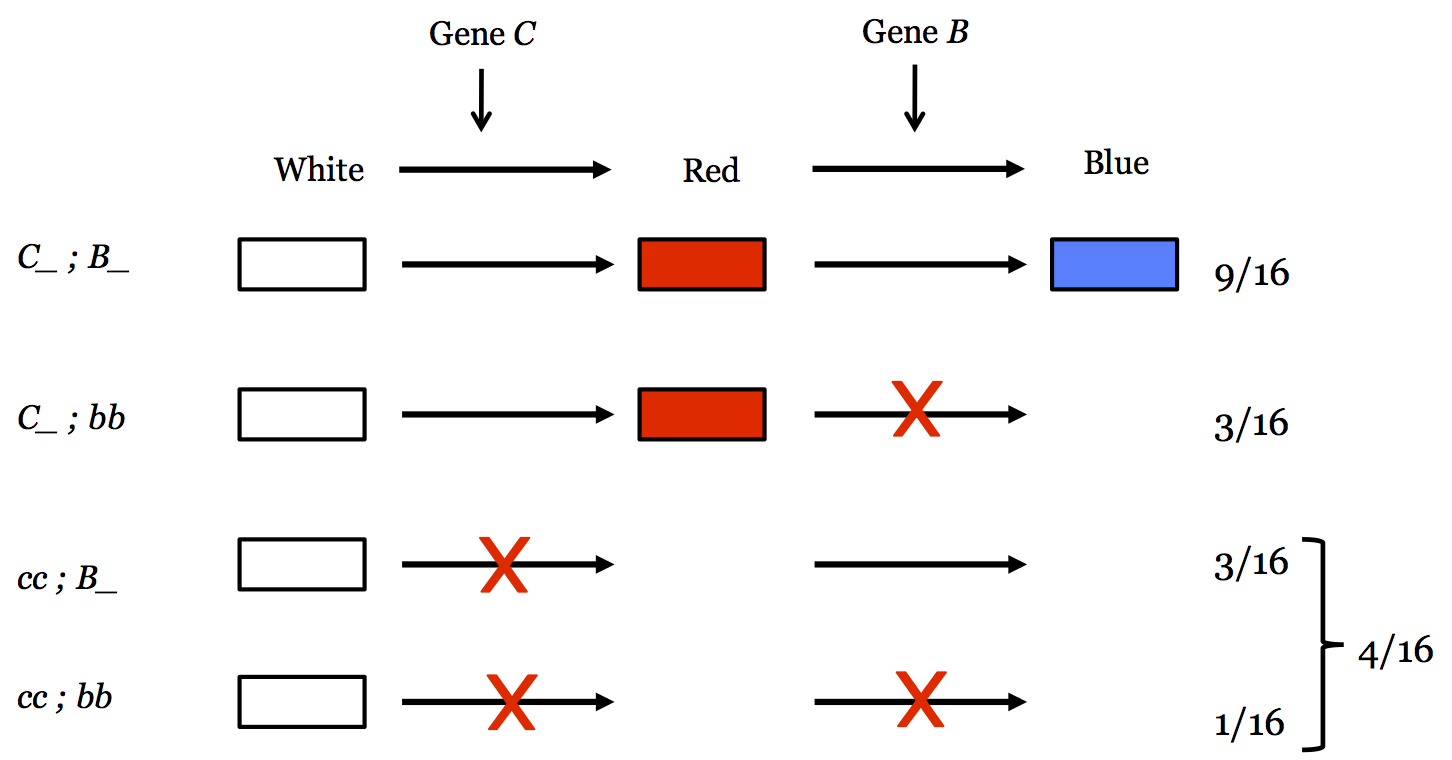
When a dihybrid cross is performed CcBb x CcBb you will observe a 9:3:4 phenotype ratio. Without gene interaction you would get the classic 9:3:3:1 ratio but since the genotypes ccB_ (3/16) and ccbb (1/16) have the same phenotype, they are combined in the phenotype ratio (4/16). A plant that has a C_ genotype (i.e. functional C gene product) can then have either red flowers (genotype bb) or blue flowers (genotype B_. This is summarized here:
|
|