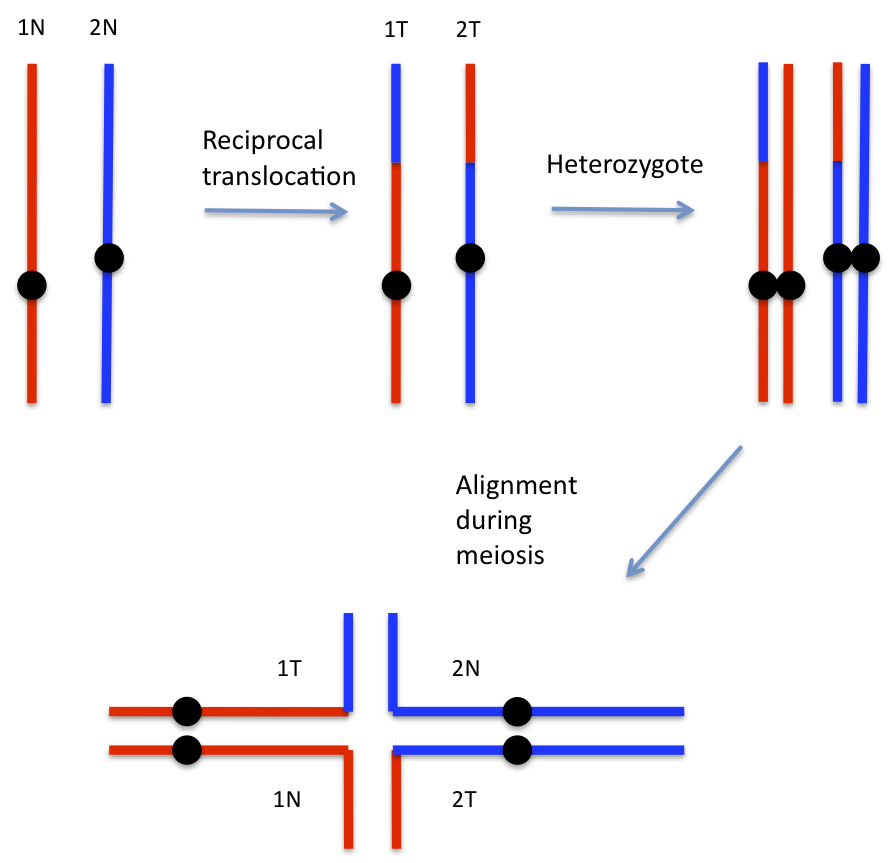
Reciprocal Translocations
A reciprocal translocation is the exchange of genetic information between nonhomologous chromosomes without any loss.
If the breakpoints for the translocation disrupt a gene then a phenotypic effect is possible depending upon the gene that is disrupted. What is generally true for reciprocal translocations, though, is that they create a novel situation during meiosis. In individuals who are heterozygous for a reciprocal translocation, alignment of homologs will require the formation of a cruciform with four chromosomes.
|
|
The segregation of these four can occur in any of three ways. In the figure, the pairs that can segregate together are:
Notice that if either of the first two possibilities (adjacent disjunction) occurs then meiosis will produce aneuploid gametes. For example, if one gamete contains [1T, 2N] and the other contains [1N, 2T] - which will result from the first possibility - then each is missing some chromosome segment.
As a result, the fertility of these heterozygotes is significantly reduced.