Activation of Transcription Factors
| Eukaryotic Regulation | General Trx Factors |
Many Transcription Factors have an inactive form and an active form. The active form is the form that affects transcription initiation rate of a target gene. For some of these Transcription Factors the inactive form cannot bind to the regulatory element while for others the inactive form is able to bind to DNA but it does not affect transcription. Regardless, in both cases it is the active form of the Transcription Factor that can bind to its regulatory element and influence transcription rate of the target gene(s). A cell can respond to conditions by changing the Transcription Factor from active to inactive or vice versa and this will have an effect on expression levels.
There are also some Transcription Factors that do not need to be activated in order to influence gene expression. These Transcription Factors are always capable of binding and regulating expression. For a Transcription Factor like this, specific changes (which are different for each Transcription Factor) lead to the Transcription Factor being expressed or repressed. This in turn leads to a change in the expression of genes regulated by that Transcription Factor. Once the Transcription Factor is expressed it will have a regulatory effect and once it is repressed it no longer has a regulatory effect. So the basic concept is the same as activation and inactivation.
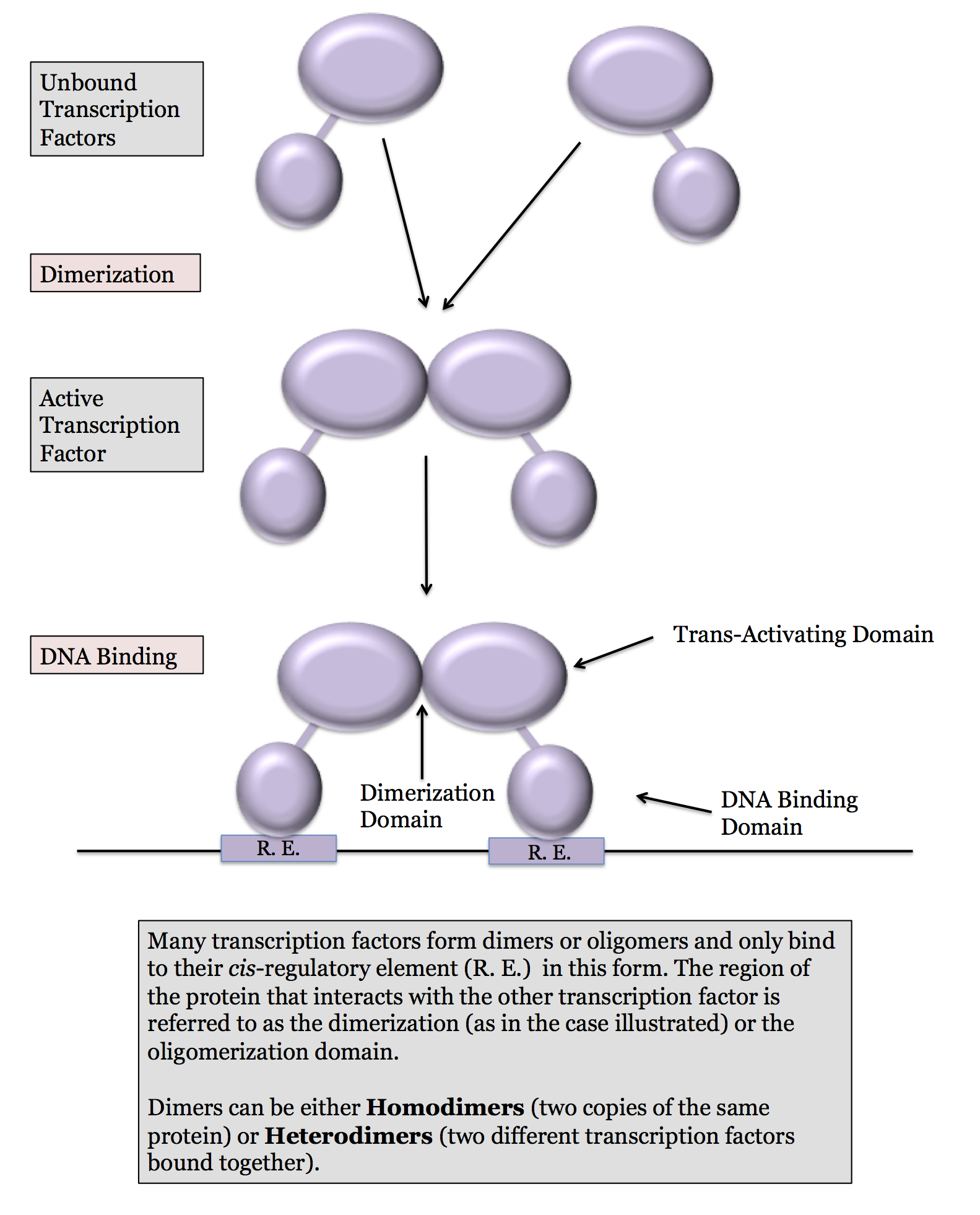
There is a variety of ways in which Transcription Factors are activated. Some Transcription Factors are activated by phosphorylation, others by dimerization, others by proteolytic cleavage, and others by being released from a protein complex. (There are some other mechanisms but this list gives you an idea for the majority of Transcription Factors.) For example, in the figure below we see a situation in which a Transcription Factor binds to its regulatory element when it has dimerized.
|
|
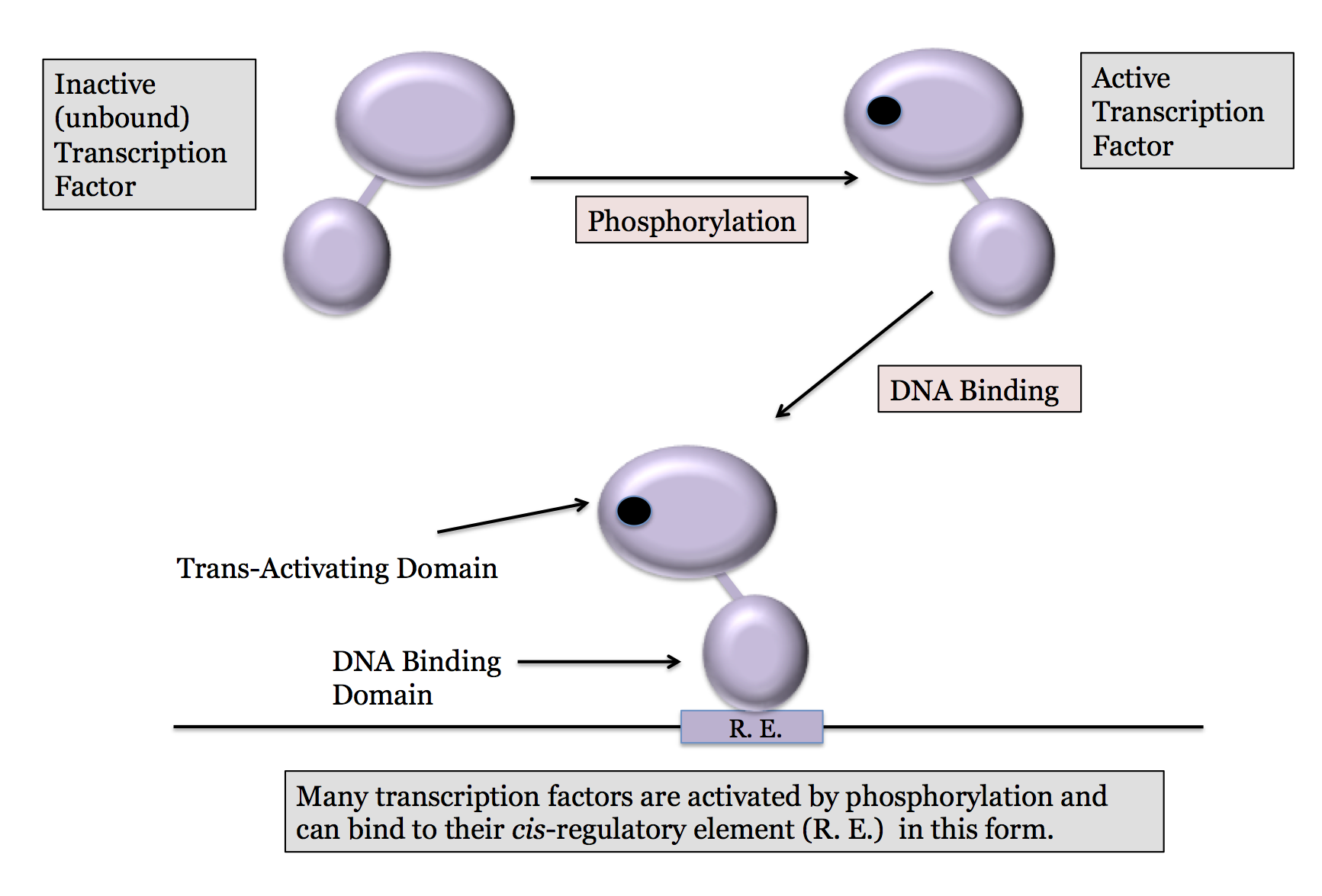
Another common method of activation is through the phosphorylation of the Transcription Factor as illustrated here. The phosphorylation will affect the overall protein structure and this changes the DNA-binding capabilities of the protein.
|
|
The two examples above demonstrate the concept of Transcription Factor activation. There are other ways that Transcription Factors can be activated but the general idea remains the same.
Signals and Transcription Factor Activation: Gene expression is regulated with respect to environmental conditions, which can be generally considered as 'signals'. These signals include things such as changes in temperature, changes in light conditions, or chemicals to which the organism are exposed. In multicellular organisms, signals are not limited to external conditions but include internal signals such as hormones or steroids, essentially signals from other cells. Responding to internal signals allows a cell to alter gene expression during development.
Cells respond to these signals by changing gene expression. When the signal is present it results in the activation, or inactivation, of specific Transcription Factors. This change in which Transcription Factors are activated results in changes in gene expression because it alters which Transcription Factors will affect gene expression. The mechanisms by which this occurs are covered elsewhere. For the rest of this section we will simply discuss how Transcription Factors are activated when signals are present.
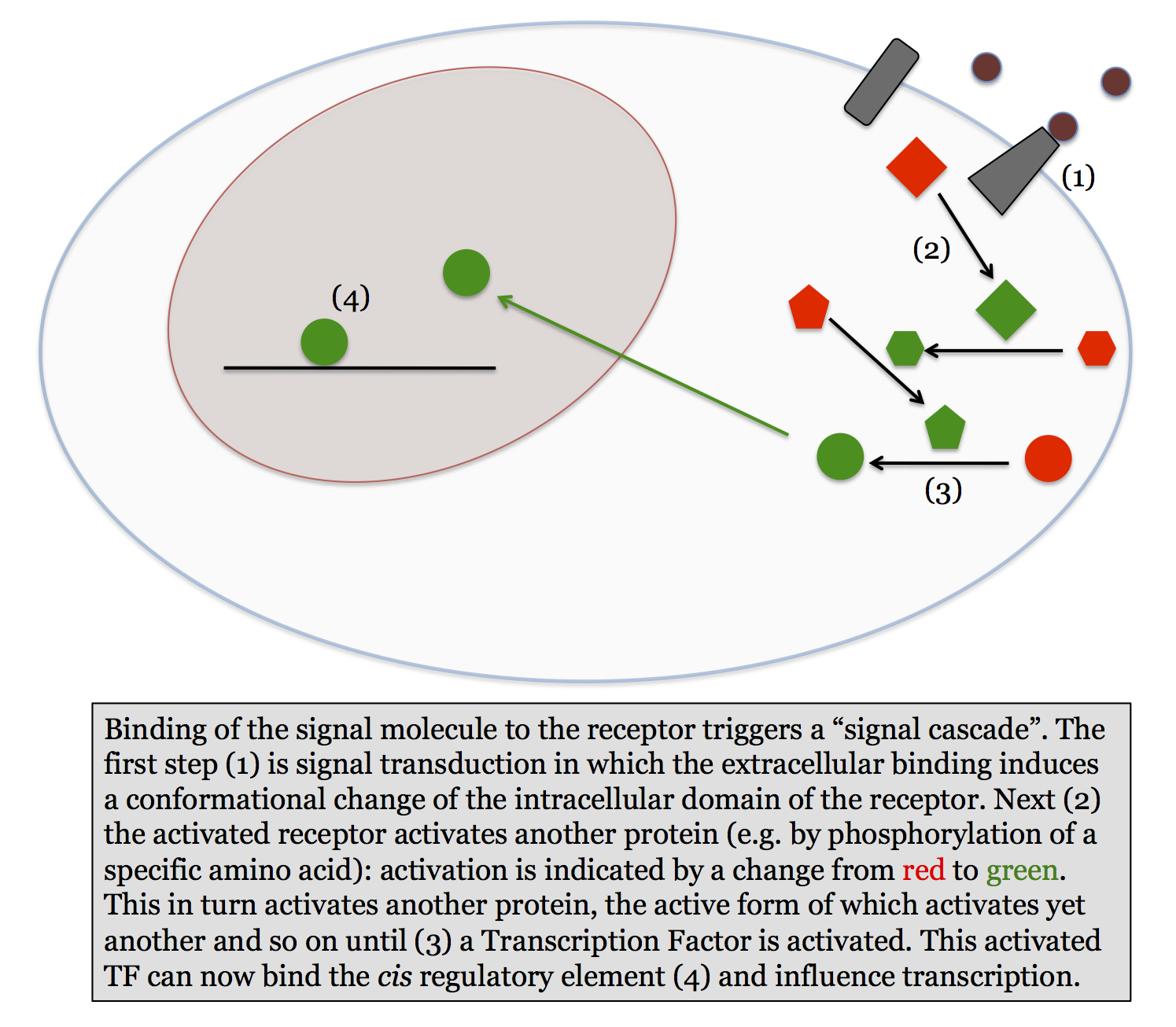
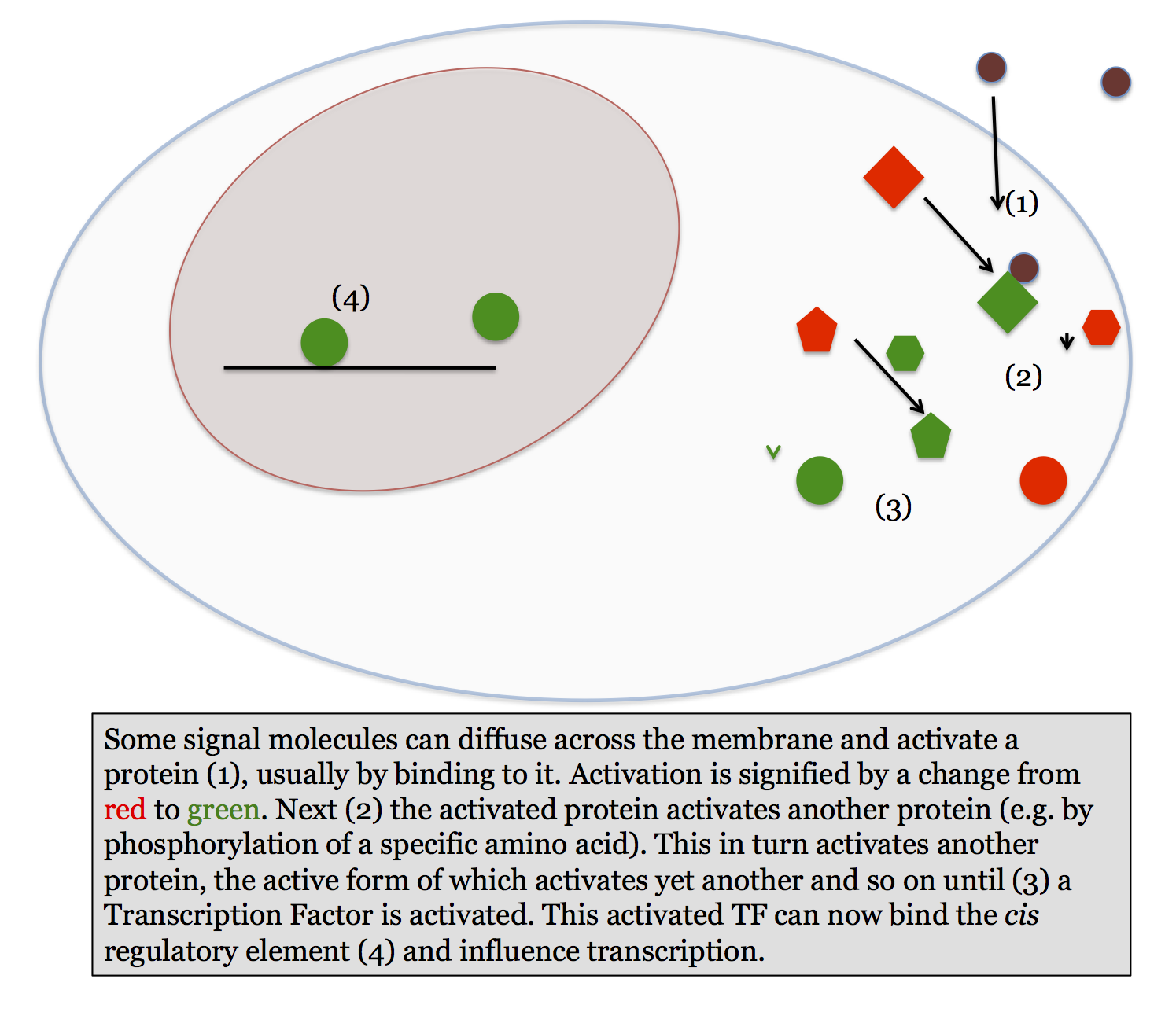
The activation of a Transcription Factor often involves a large number of other proteins. Instead of direct activation of the Transcription Factor, a signal usually results in a cascade of change (a signal cascade) in which a succession of proteins are modified. The end result is activation of a Transcription Factor (or, very often, multiple Transcription Factors). This then leads to a change in gene expression of the target genes of the activated Transcription Factor(s). This type of signal cascade plays an important role in cancer genetics.
|
|
|
|
| Eukaryotic Regulation | General Trx Factors |