Transcription Factor Action
| Eukaryotic Regulation | General Trx Factors |
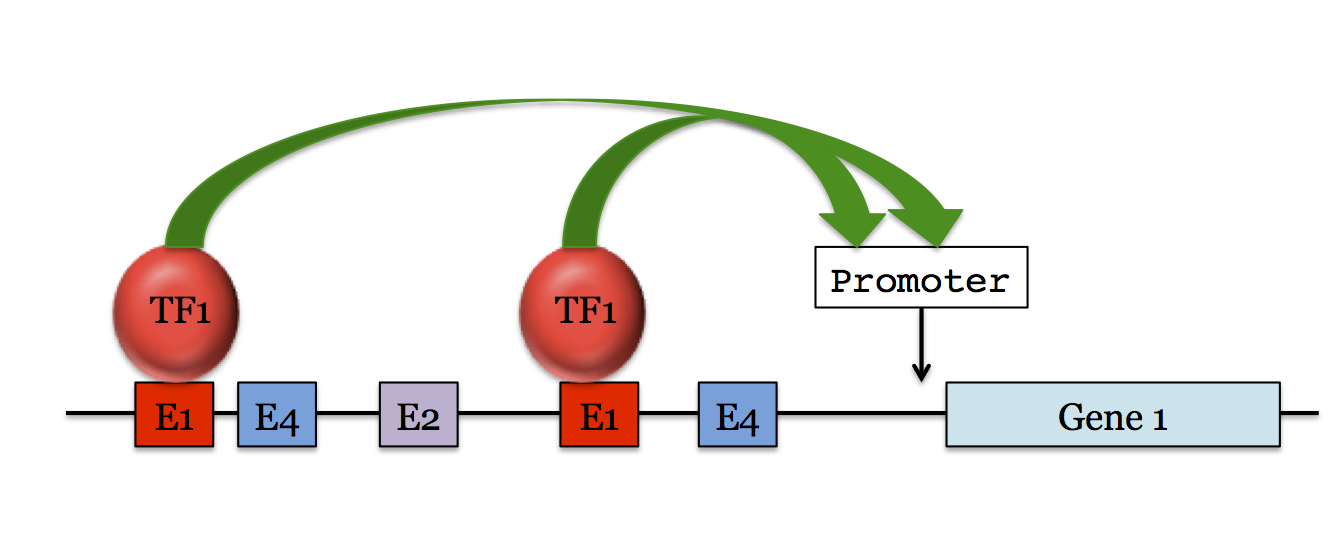
In the section on the binding of transcription factors to their recognition sequences we discussed how the binding results in an effect on transcription at a nearby promoter. This was diagramed as follows:
|
|
Mechanisms of action:
What we cover on this page are the mechanisms by which this occurs. Once bound to the recognition sequence, activation or repression can occur in a variety of ways but the two major mechanisms that have been most thoroughly studied and that we will concentrate on are:These two general mechanisms are discussed in detail below. However, we first have to discuss the Mediator Complex which plays a critical role - really, the central role - in both.
Mediator
The Mediator Complex is a large protein composed of many different subunits. The general role that the Mediator plays is how it got its name: it mediates the action of Transcription Factors that are bound to their recognition sequences. Transcription Factors do not actually influence transcription directly, instead their action is a result of the fact that they interact with the Mediator Complex and it is the Mediator that affects transcription.
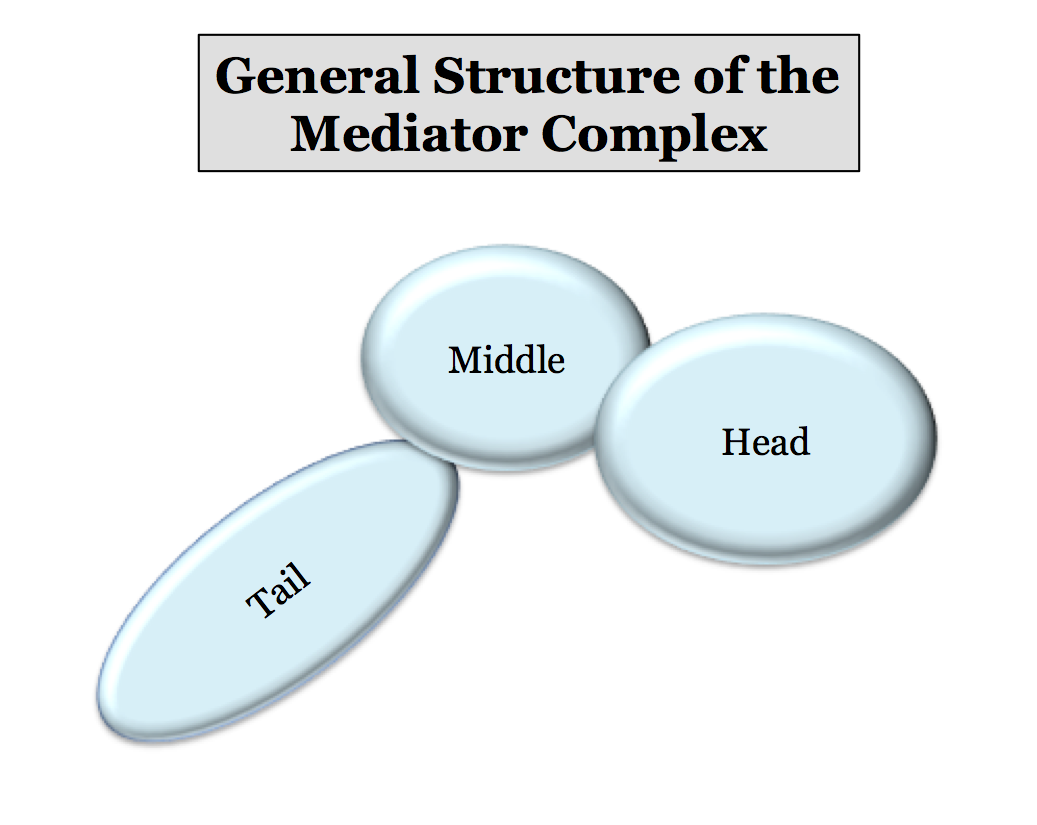
The metazoan Mediator is composed of at least 30 subunits. What makes it particularly complex is that there are actually multiple forms that Mediator can take as a result of having different sets of subunits come together. So, there is not just one Mediator in a cell but many different forms. We are not going to consider this aspect in much detail since it is not particularly well understood right now but instead we will just discuss a general structure of the Complex. This general structure is that Mediator is composed of a Tail, a Head and a Middle section:
|
|
Binding of Mediator by Transcription Factors
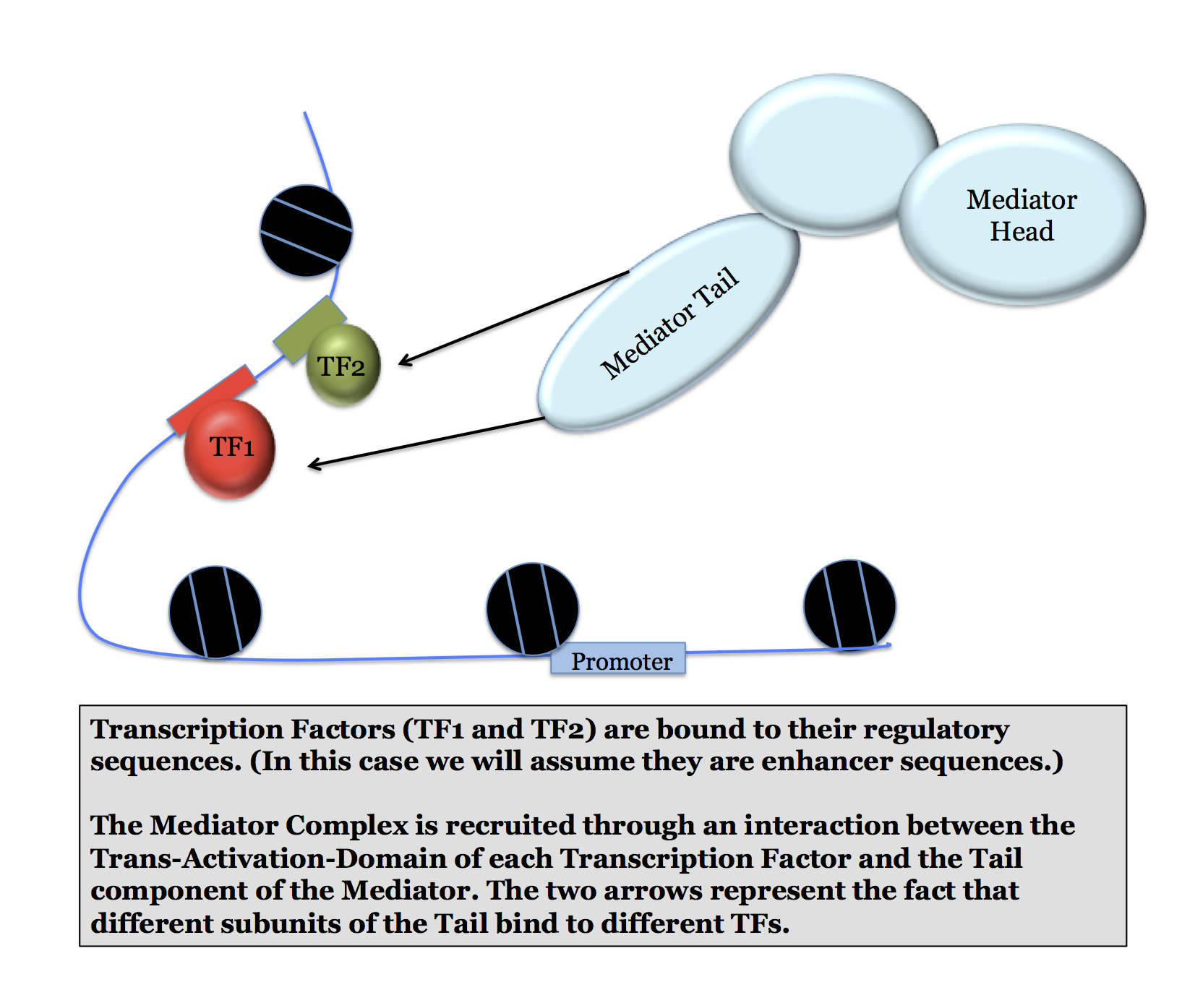
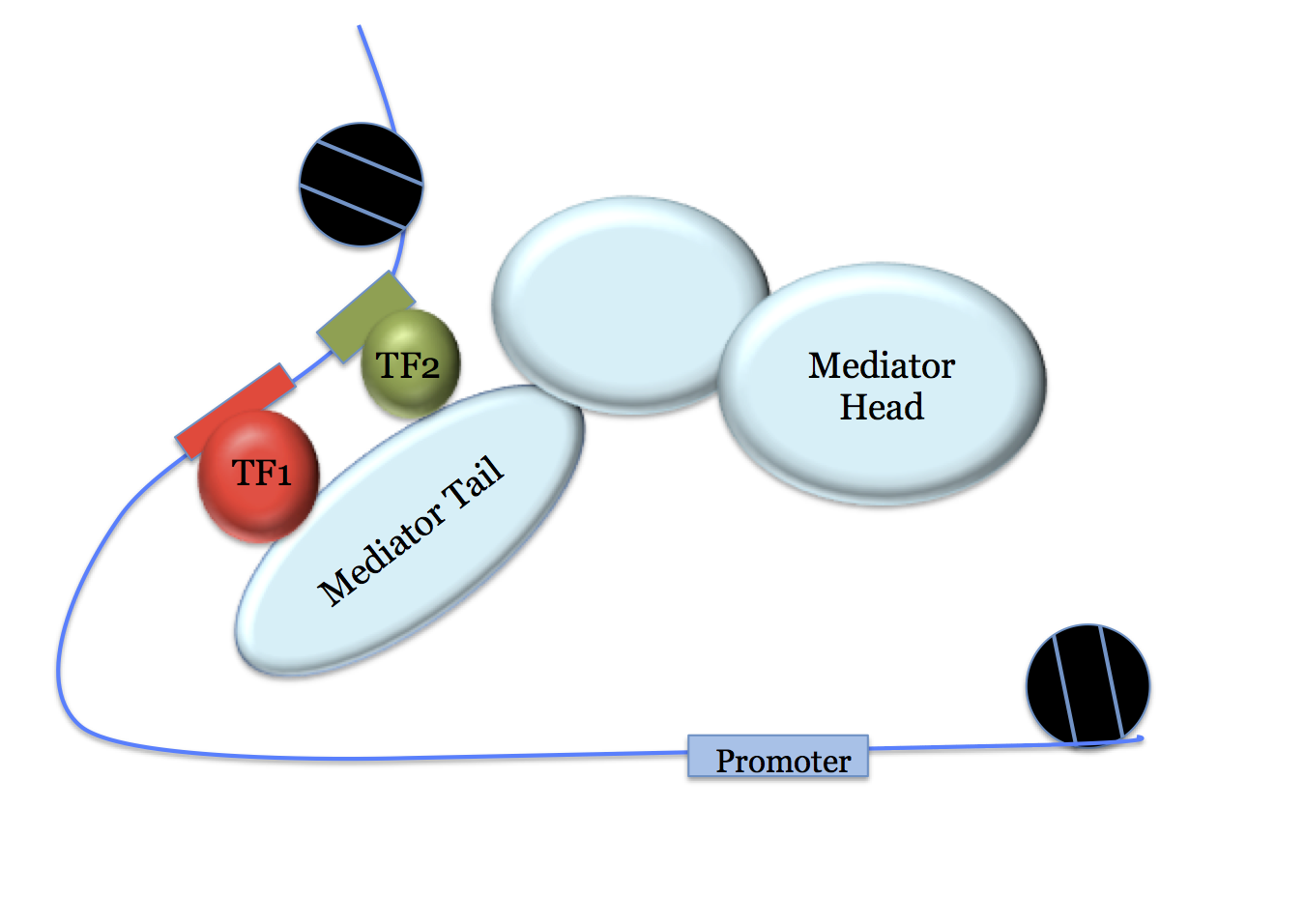
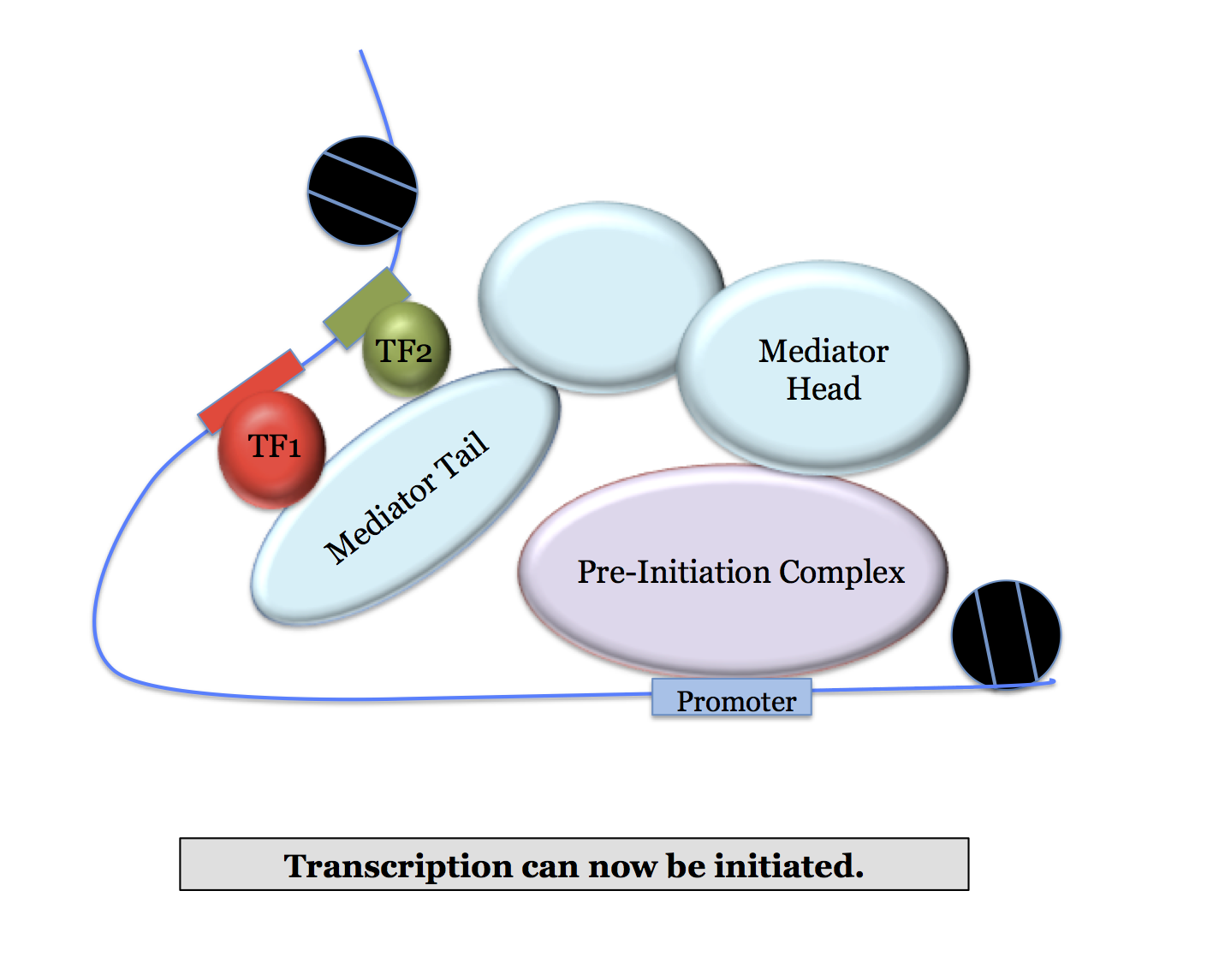
No matter what regulatory mechanism is - we discussed the two main possibilities above of an influence on the formation of the Pre-Initiation Complex or the recruitment of chromatin remodeling factors - the Mediator plays the central role. In fact, the first thing that must happen in either case is that the Transcription Factor(s) must bind to Mediator as shown in the Figure below. Notice that the DNA has been drawn as looping around so that the Mediator Complex is near the promoter sequence. This looping is a controlled structure that actually involves some other components that are not shown here and that we will not consider. However, it is important to understand that the DNA is in fact looped around in this manner.
|
|
|
|
The Role of the Mediator Complex
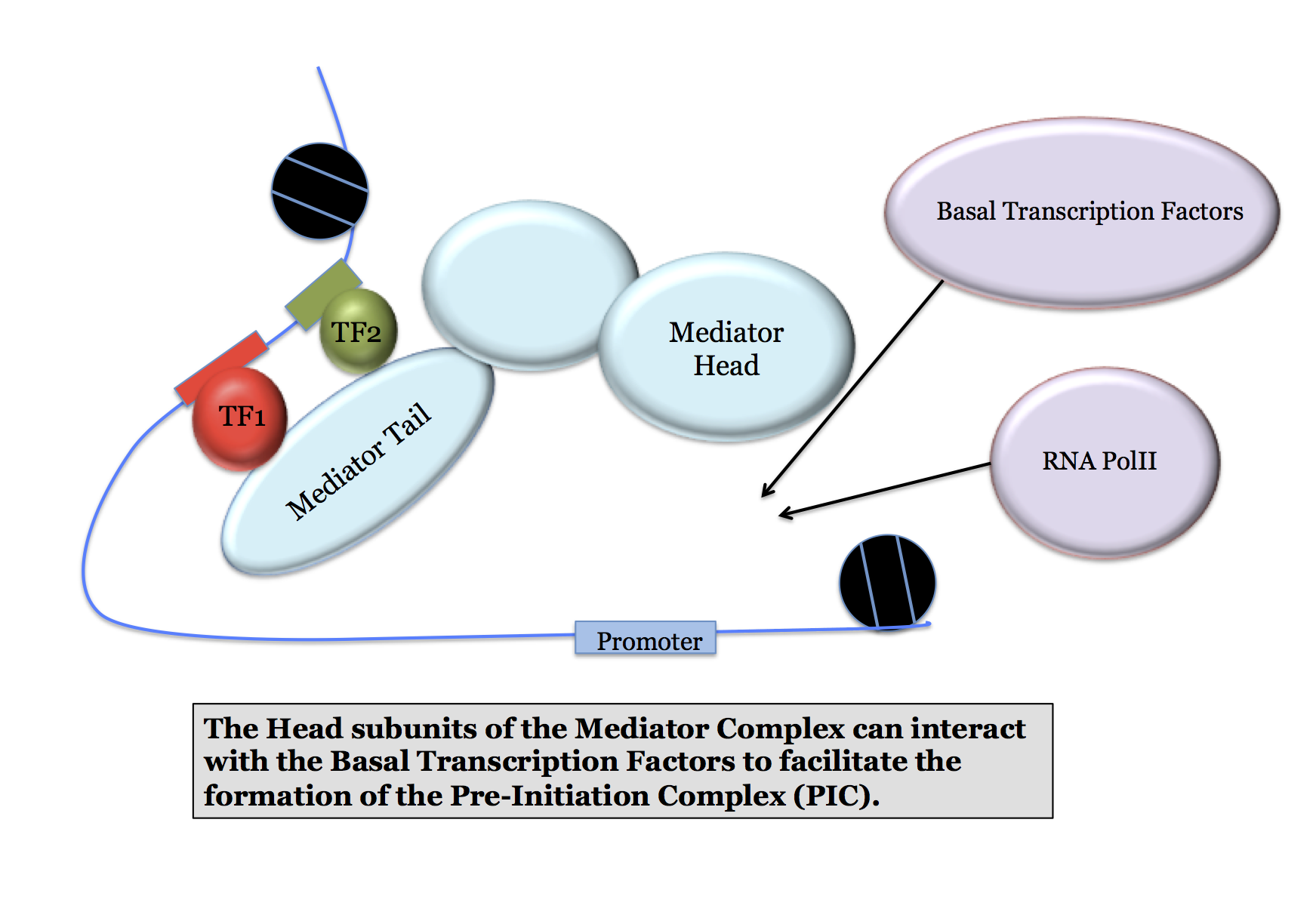
We now get to the two general mechanisms of regulation. Once Mediator has bound to Transcription Factors it can have an influence on transcription rate either by affecting formation of the Pre-Initiation Complex (PIC) or by recruiting chromatin remodeling factors. It is still not fully understood what causes Mediator to perform one function as opposed to the other but what seems to play an important role in determining the action of Mediator is the fact that there are many different forms of the Mediator Complex, forms that differ in exactly which subunits are part of the Complex. It appears that different forms of Mediator act in different ways, some interacting with PIC and some recruiting remodeling factors. The basic model, then, is that different Transcription Factors will bind different forms of Mediator. The result of this would be that a specific TF has a consistent effect on transcription but different Transcription Factors can result in different regulatory effects.
Formation of the Pre-Initiation Complex: If the regulatory elements involved are enhancers then Mediator can facilitate the formation of the PIC. This is illustrated in the following Figures.
|
|
|
|
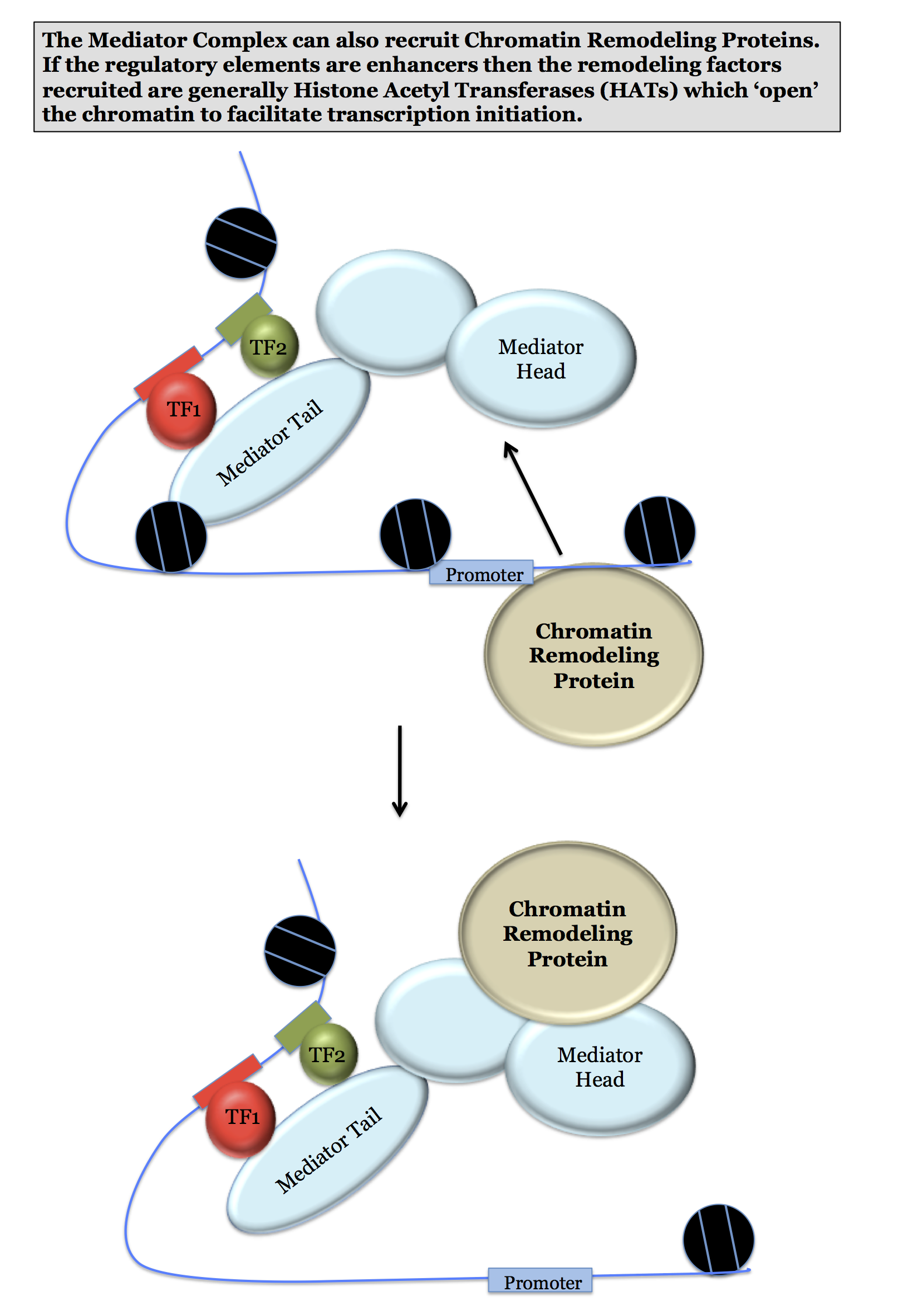
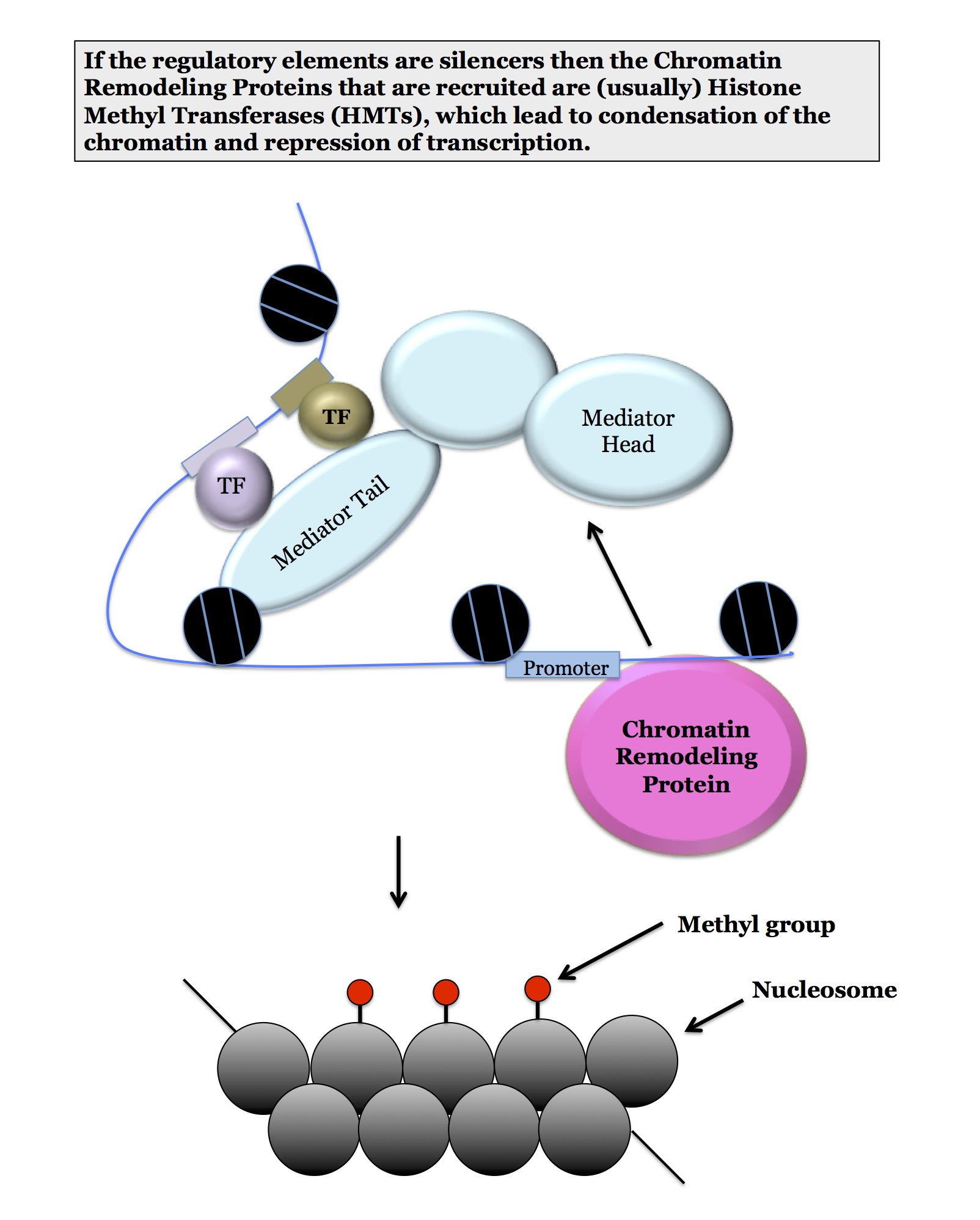
Recruitment of chromatin remodeling factors: Mediator can also recruit Chromatin Remodeling Proteins (Factors). Depending on which Proteins are recruited this can either lead to an opening of the chromatin, which facilitates transcription, or a condensing of the chromatin structure, which leads to gene silencing. What is happening in this case is that Mediator is leading to epigenetic regulation which you can read about in detail here.
|
|
|
|
| Eukaryotic Regulation | General Trx Factors |