General Regulatory Mechanisms
| Prokaryotic Regulation | Table of Contents |
Before proceeding here, make sure that you understand the general control systems. This section looks at some general mechanisms by which these controls are achieved. When you study a specific gene or operon, you should think about how it fits into these general schemes. Remember that it is the regulation of the transcription initiation rate that is the focus here.
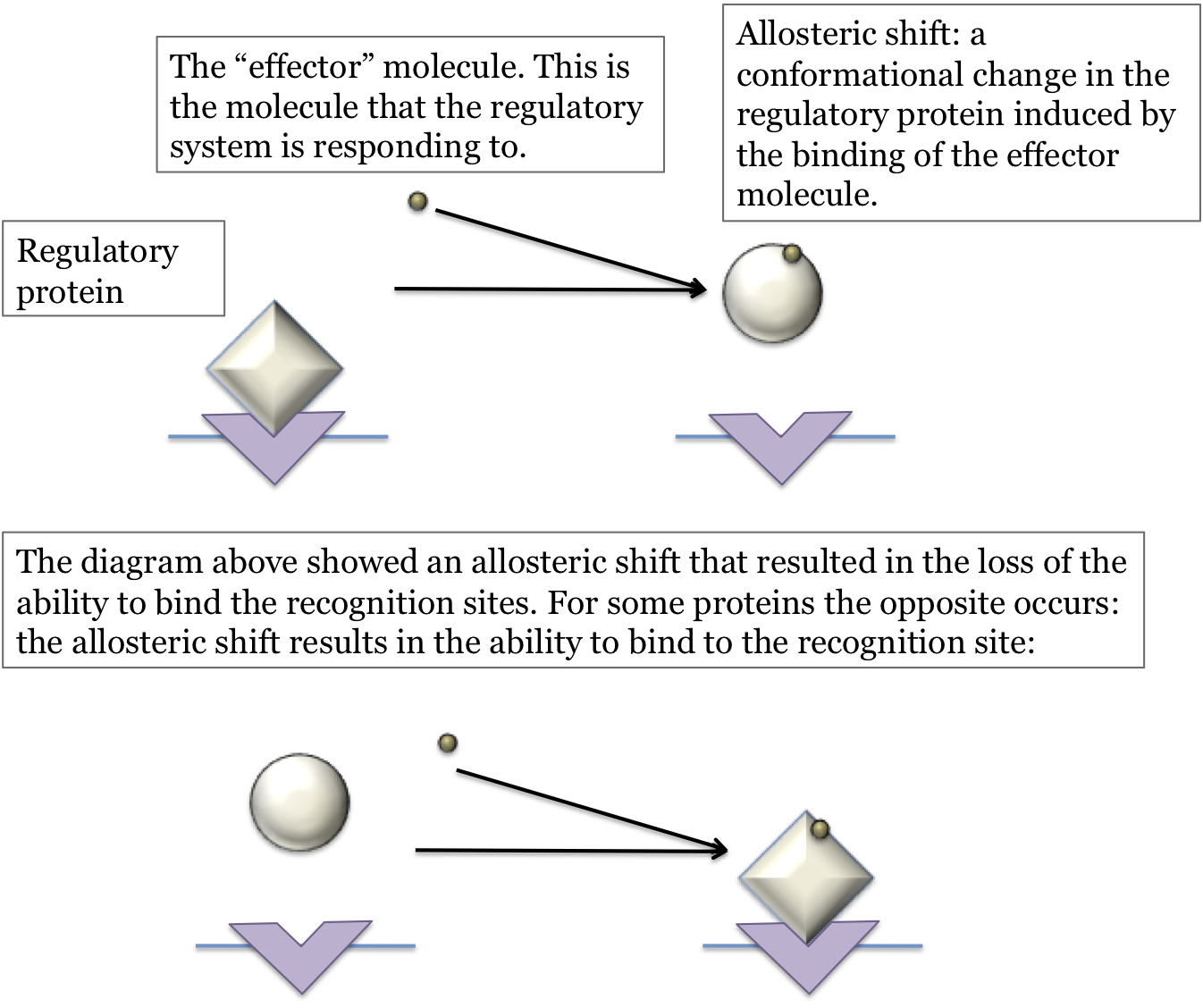
We will start with the idea of an allosteric shift. As discussed in the general control systems page, organisms respond to an effector molecule by either increasing or decreasing the rate of transcription initiation. This is generally accomplished by the action of a regulatory protein that acts by binding to a specific recognition sequence on the DNA molecule and which affects transcription through this binding. Most regulatory proteins can also bind to the effector molecule and undergo a change in structure: this change is an allosteric shift and it affects the ability of the protein to bind the recognition sequence as illustrated here. It is this change in structure that underlies many regulatory mechanisms.
|
|
Keep in mind that the binding of a protein to a recognition site is not a permanent phenomenon. Instead, a protein will be bound for a time and then release, then re-bind then release and so on. As a result, even if the protein is bound it will eventually release allowing it to bind the effector (which also is a transient binding). Different proteins can bind their recognition site with different strengths which is a reflection of the amount of time it spends bound to the site.
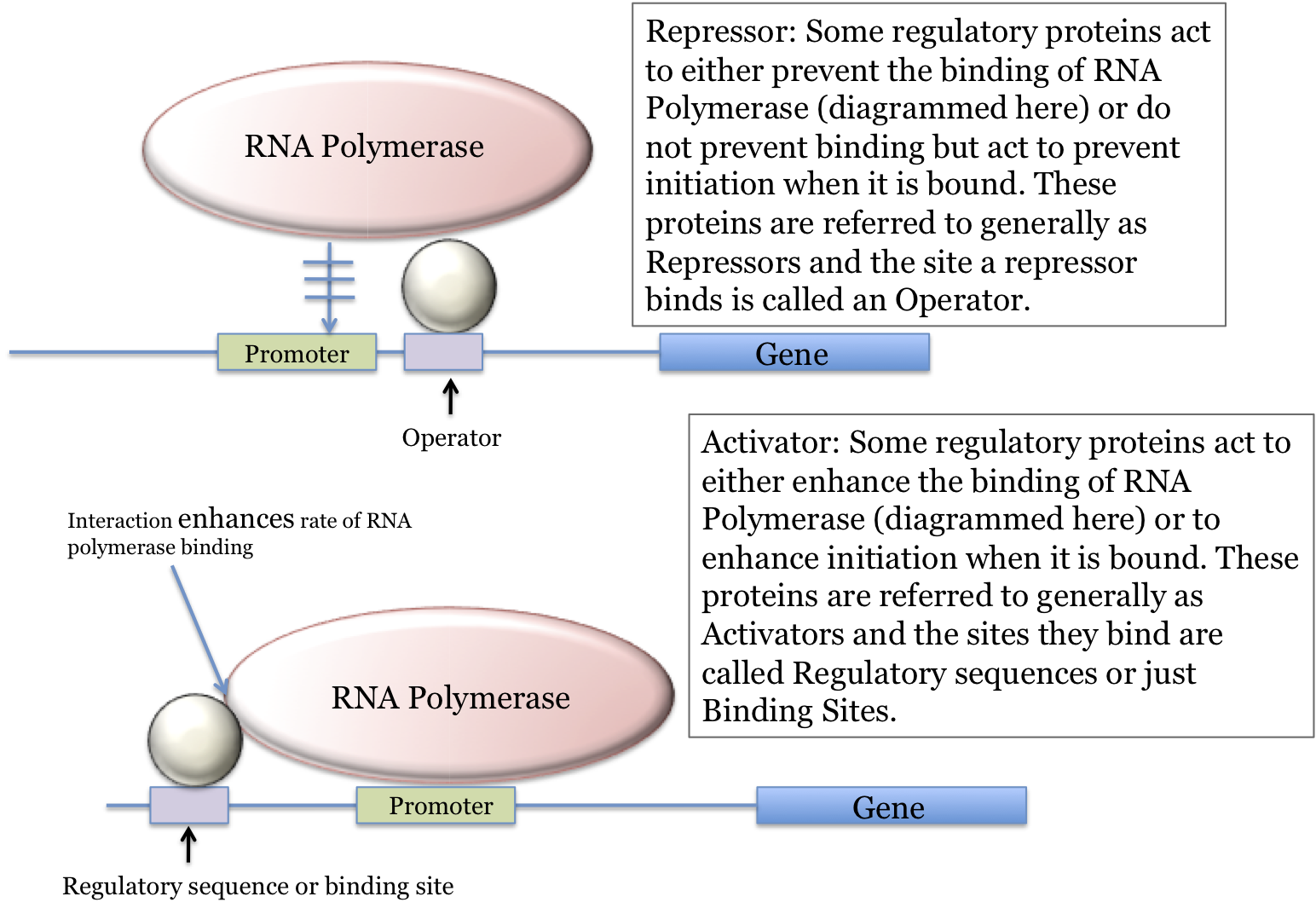
Using the concept of an allosteric shift we can now look at the mechanism underlying each of the four general control systems. Notice that the terms used for the regulatory protein and the binding site differ for the different systems although the concepts are very similar. The general terminology for the regulatory protein is shown here:
|
|
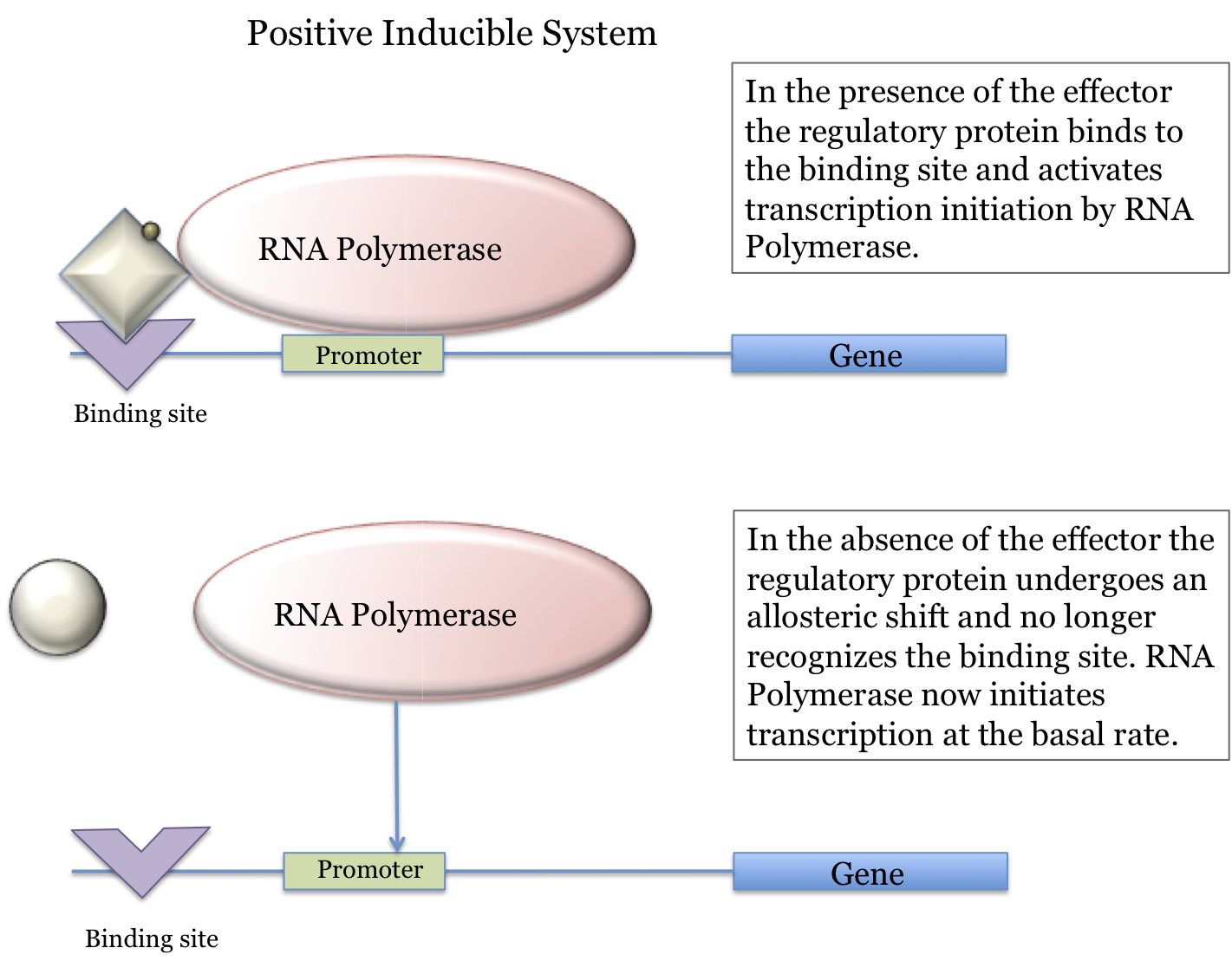
Important point: An unfortunate issue with the terminology is that the term Repressor is used for Negative Control - not for Repressible Systems! Therefore, even if the system is Inducible, if it is under Negative Control then the regulatory protein is a Repressor. On the other hand, in a repressible system under positive control the protein is an Activator.
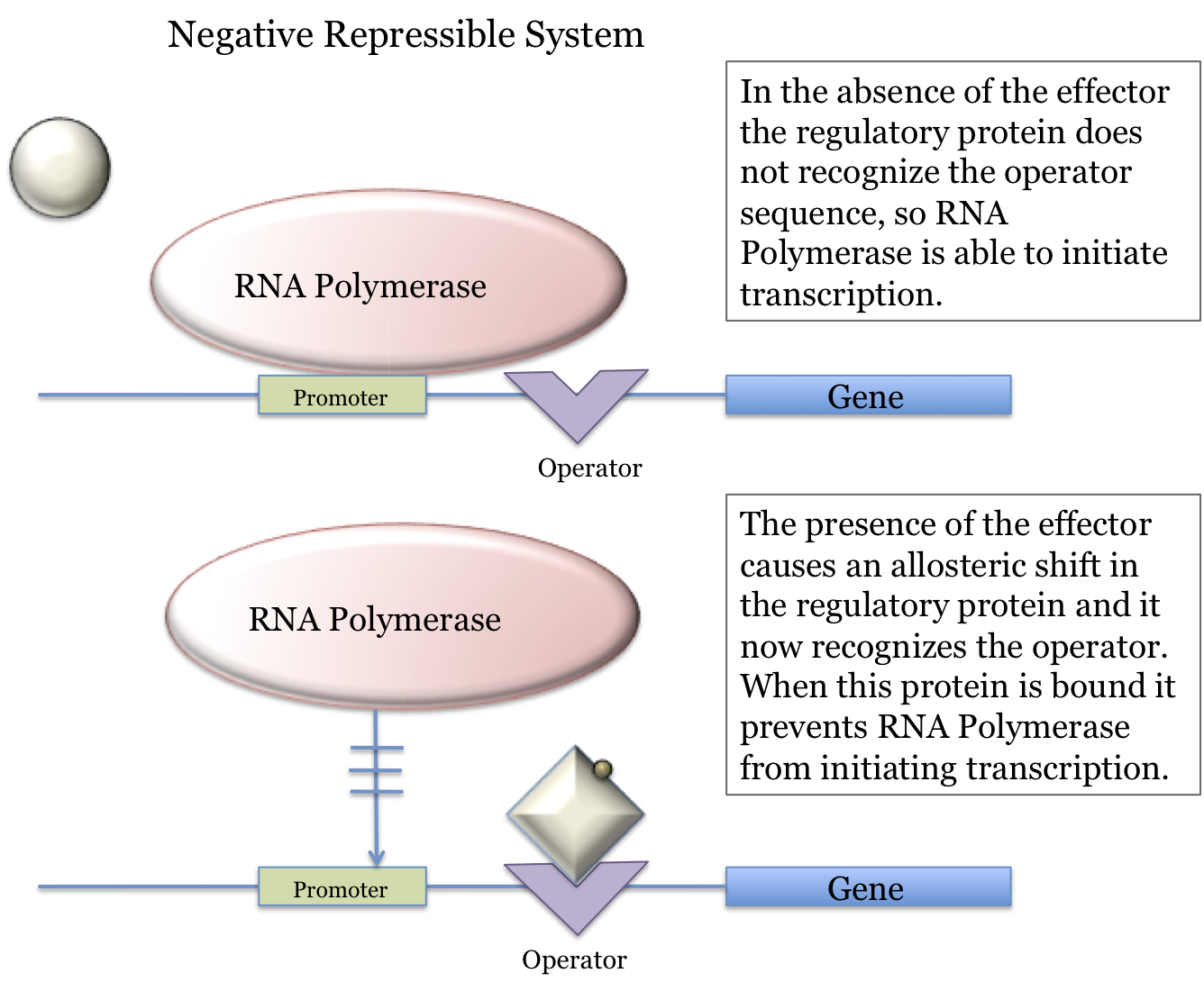
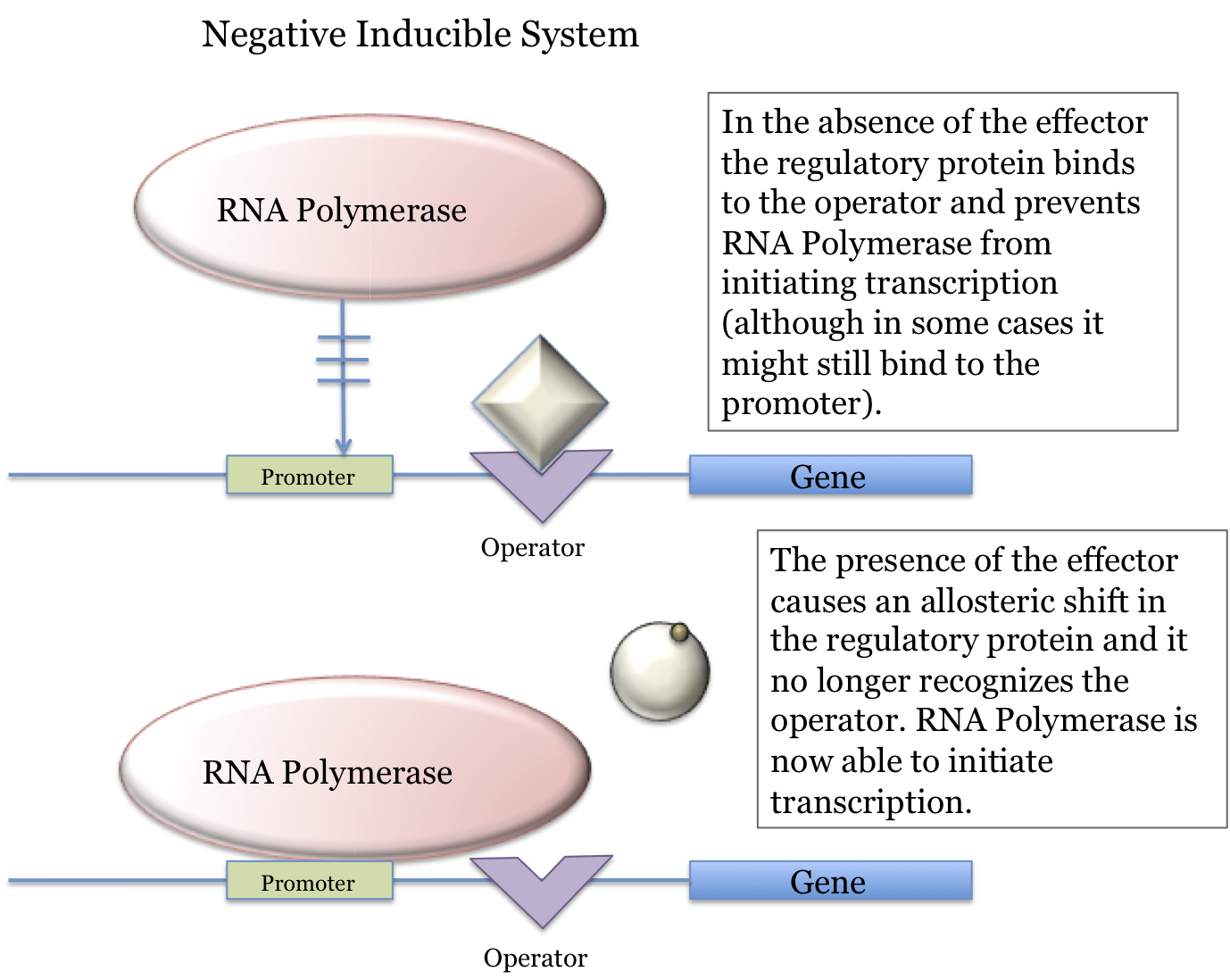
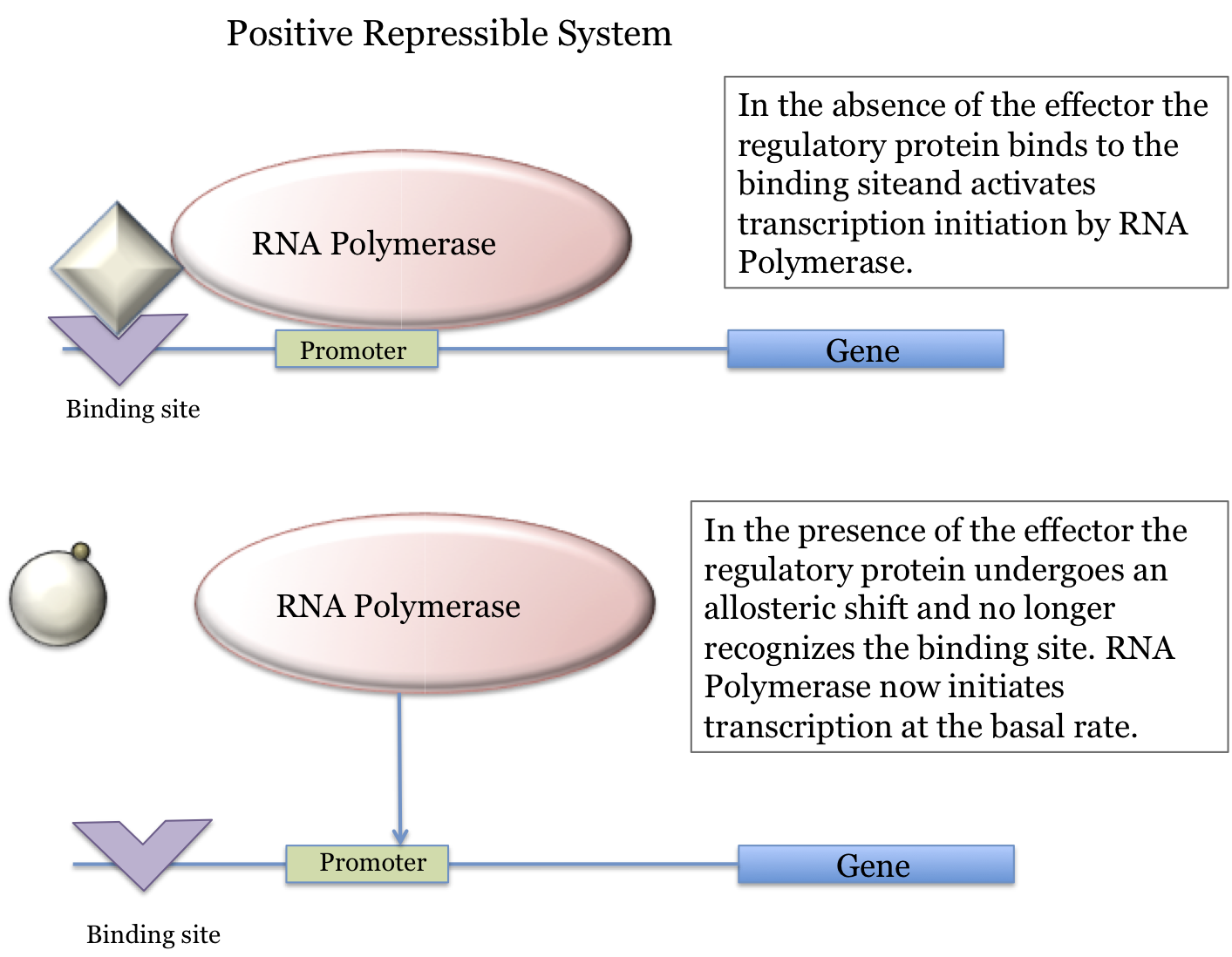
Below are four diagrams, one for each of the general control systems. Notice that in the two Repressible systems the expression level is lower when the effector is present while in the Inducible systems the opposite is true. Also notice that in the two Positive systems the regulation involves expression above the basal level.
|
|
|
|
|
|
|
|
| Prokaryotic Regulation | Table of Contents |