Lac Operon
| Prokaryotic Regulation | Table of Contents |
Like many other bacteria, E. coli utilizes glucose to obtain energy, primarily in the form of ATP. Other sugars, such as lactose, can also be utilized although the energy yield is not as efficient as with glucose (lactose is a disaccharide of glucose-galactose). E. coli has an operon coding 3 genes - lacZ, lacY and lacA - that function to allow the cell to utilize lactose. The lacZ gene codes for B-galactosidase which cleaves the disaccharide and lacY codes for a permease which pumps lactose into the cell. (The function of the transacetylase coded by lacA is not certain.) There is another gene, the lacI gene that codes the regulatory protein for the operon - the Lac Repressor - and is transcribed from a separate promoter.
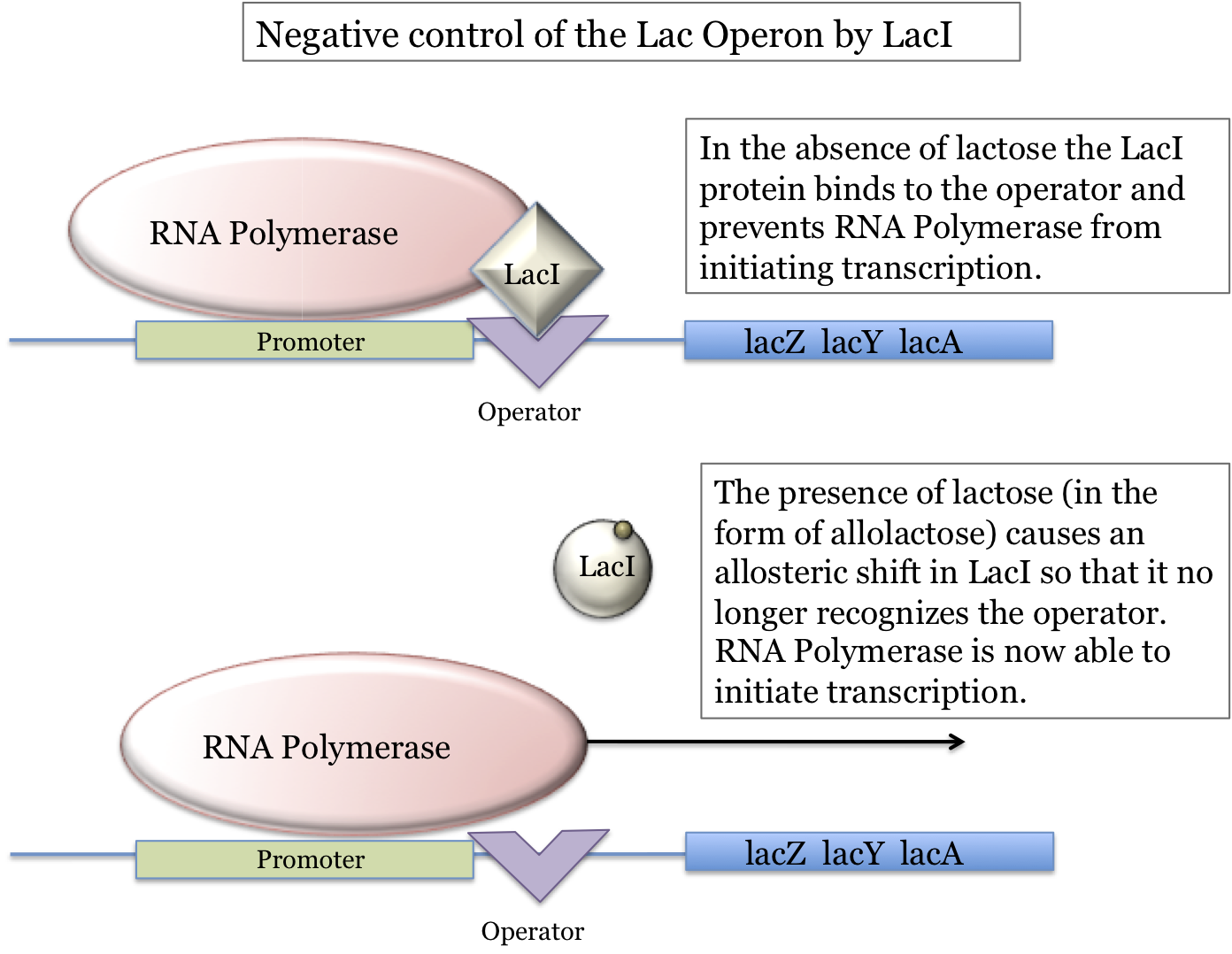
There are two levels of control to the Lac operon; the first that we will discuss is a mechanism of negative control. The cell only "wants" to express the operon when lactose is actually available; otherwise, valuable resources and energy are being wasted. The system of negative control is an inducible one: when lactose is present, some is converted to allolactose which is the effector. This effects and allosteric shift in the LacI protein allowing RNA Polymerase to initiate transcription. Therefore, it is negative inducible.
|
|
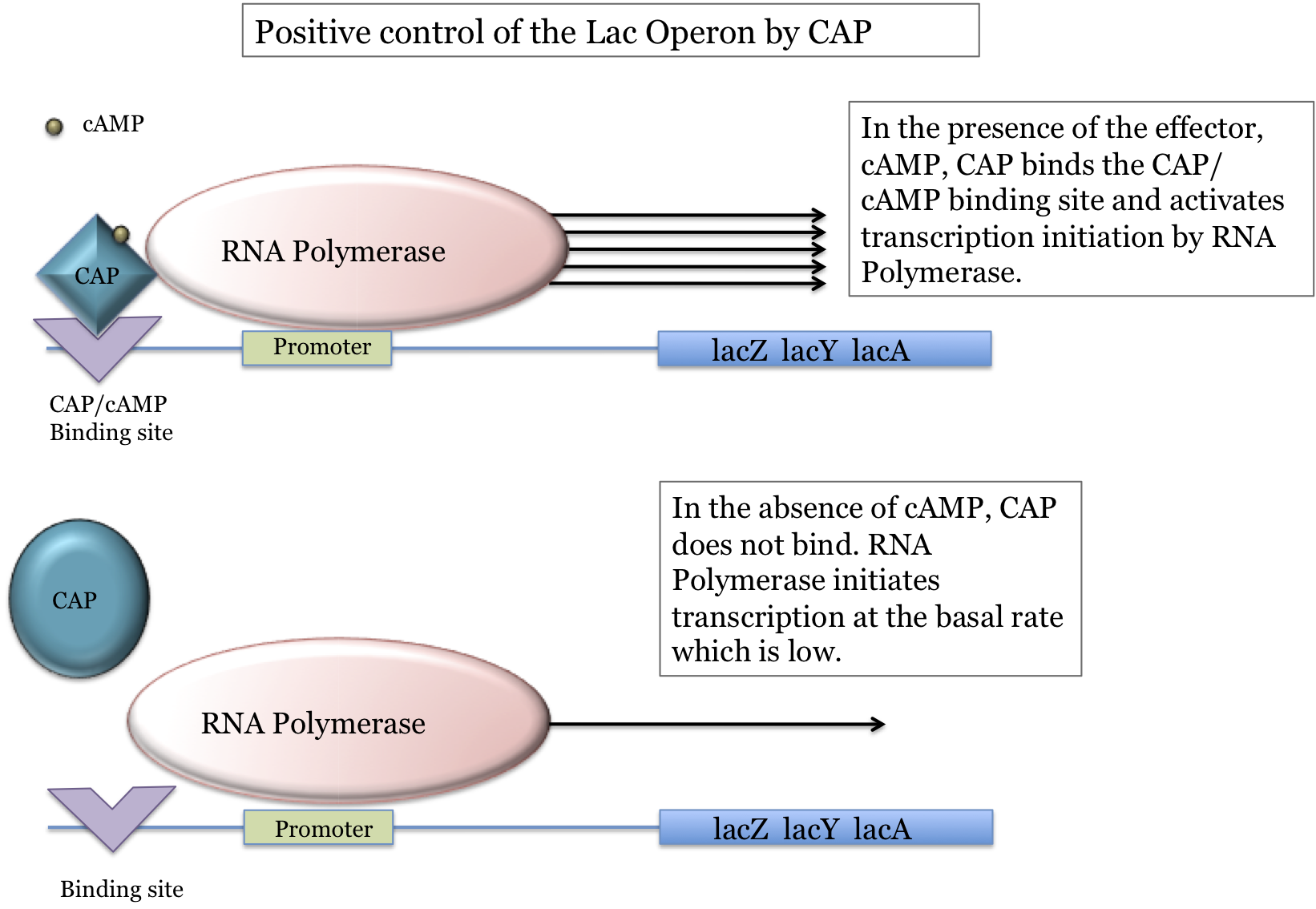
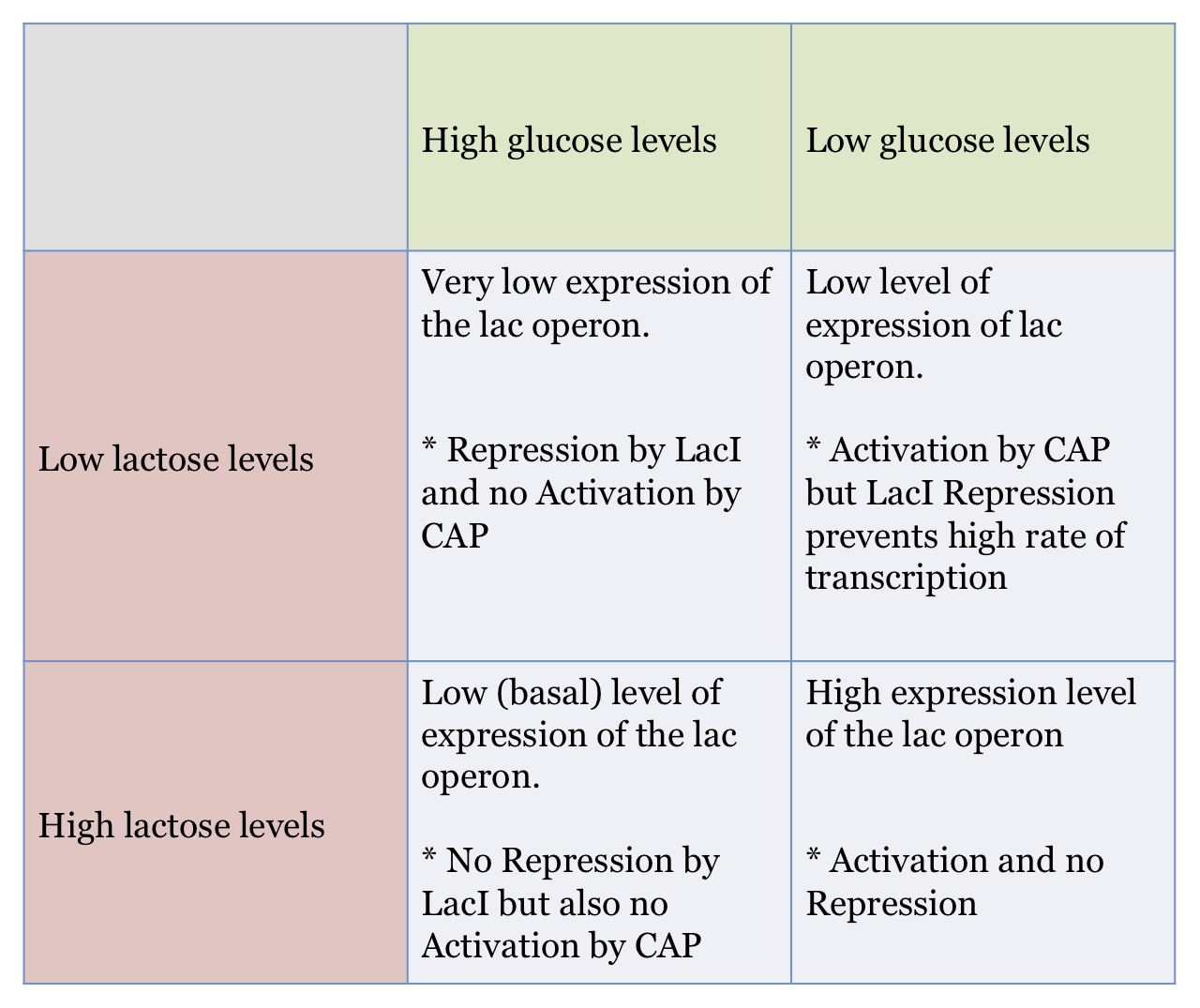
The second mechanism is one of positive control. Even when lactose is present, if there is sufficient glucose then it is more efficient to utilize the glucose directly. So, if both glucose and lactose are present the expression level remains low: even though LacI is not bound the basal level of transcription is low. However, when glucose levels are low and lactose is present, expression of the operon is activated by positive control. This involves the protein CAP (Catabolite Activating Protein) which regulates a number of different operons, and cAMP which is the effector molecule. When cAMP levels are high then ATP levels are low which is the signal that glucose levels are low. This mechanism is illustrated here:
|
|
|
|
A video about the lac operon:
| Prokaryotic Regulation | Table of Contents |