Gene regulation by RNA occurs in prokaryotes, just as in eukaryotes. The mechanisms, however, are quite different in the two groups of organisms. The most common regulation involves the binding of a regulatory RNA to an RNA target molecule such as mRNA. The regulatory RNAs are relatively short and are now generally called small regulatory RNAs or sRNAs. There are two general types of sRNA molecules; they are distinguished by whether or not the sRNA is transcribed from the same locus as the target RNA:
- cis-encoded sRNA. When an sRNA is cis-encoded it is referred to as antisense RNA (asRNA) . These RNA molecules are transcribed from the same locus as the target gene (the regulated gene) using the sense strand as the template. Thus, the RNA is an antisense RNA. These RNA molecules will have full complementarity to the target RNA as a result.
- trans-encoded sRNA. These regulatory RNA molecules are transcribed from a different genomic location than the target RNA. Because they are not transcribed from the same locus they usually have limited complementarity to the target RNA.
Mechanisms of action
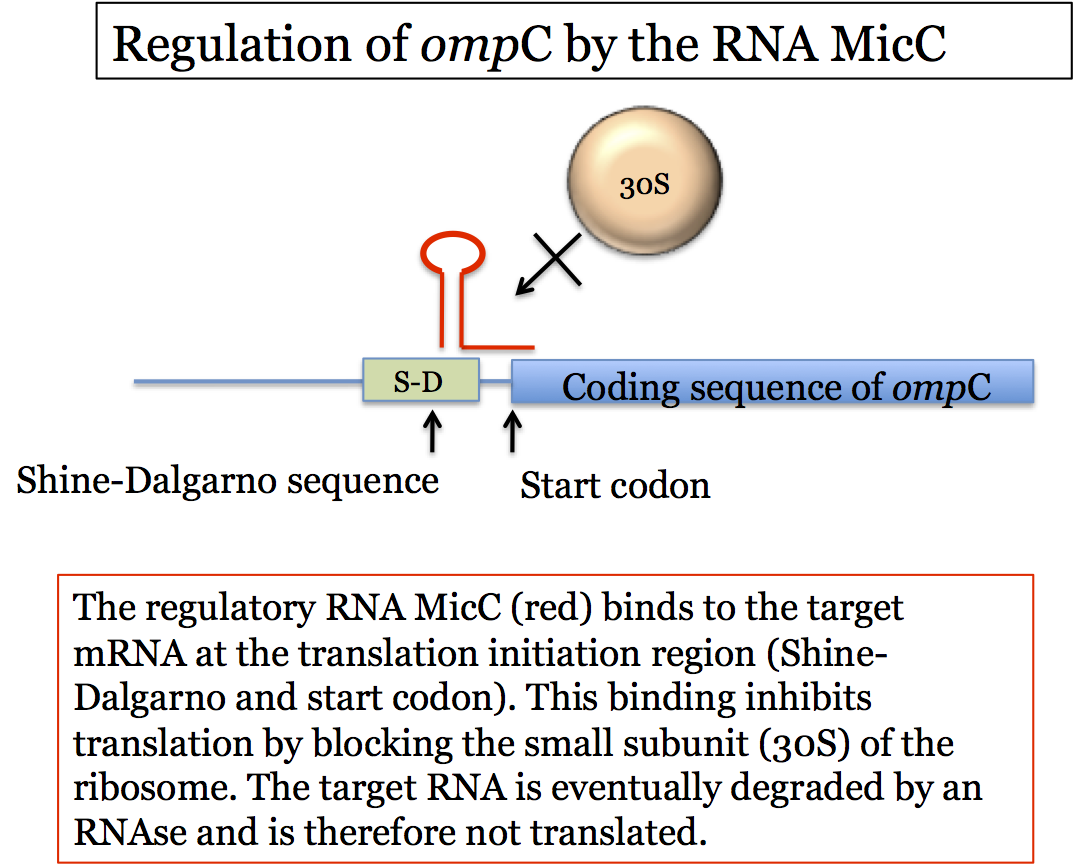
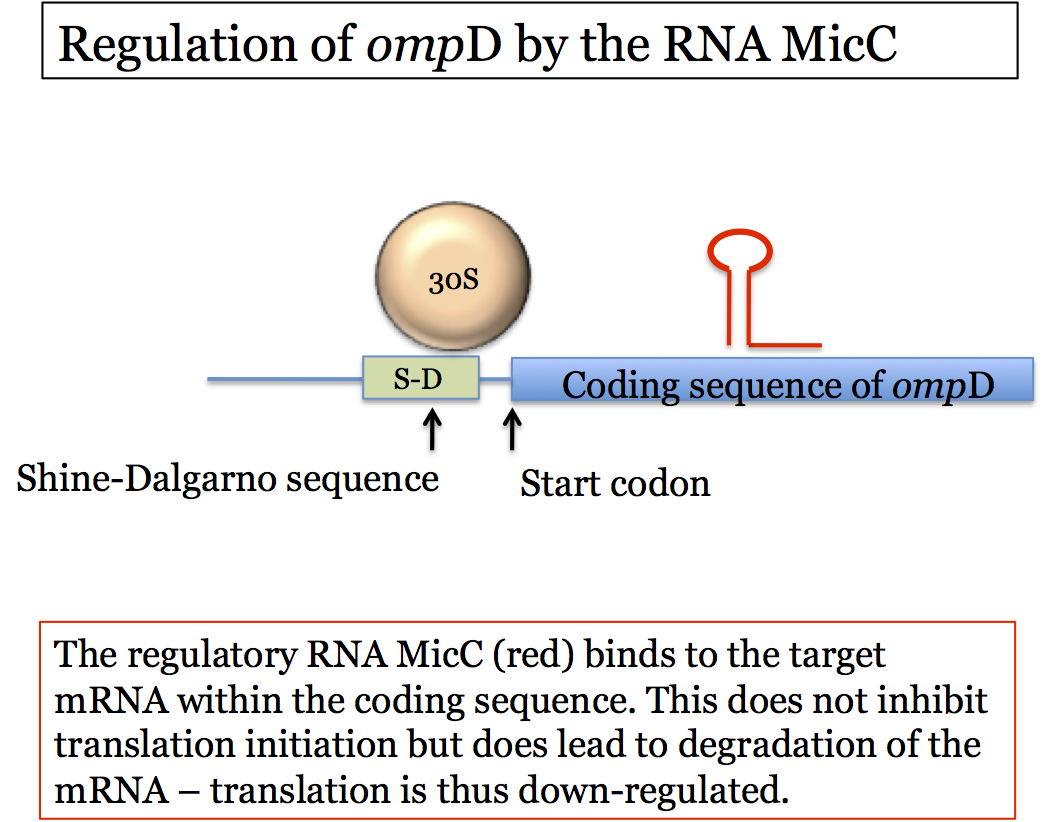
Inhibition of translation: Regulatory RNA molecules (sRNAs) often act by binding their target RNA and influencing translation as a result of this binding. Almost always the binding of an sRNA results in down-regulation (a reduction in translation levels) but an example of up-regulation has been demonstrated. The binding of the sRNA is often in the region of the mRNA where translation is initiated. Two general mechanisms of down-regulation by sRNA binding are shown in these figures. These are examples of sRNA regulation from Salmonella. The first example is regulation of the mopC transcript by the MicC RNA (an sRNA) which involves binding in the translation initiation region. The second example is regulation of the mop.D transcript by the same sRNA molecule. In this case the MicC binds within the coding region.
Inhibition of transcription: sRNAs can also regulate the target by influencing transcription. In some cases this involves interference between the transcription of an asRNA and the transcription of the regulated gene. The result is a decrease in the transcription rate of the target gene and, therefore, a down-regulation of expression. In others the sRNA can cause attenuation of transcription of the target gene which also results in down-regulation.
RNA cleavage: In some cases, binding of the sRNA to the target RNA molecule alters the stability of the target which then influences the cleavage of the target RNA by ribonucleases. In some cases binding of the sRNA promotes cleavage while in others the binding of sRNA blocks cleavage. The overall effect in either case is to change the lifetime of the target RNA. This means that the target RNA can either have an effect for a longer time (up-regulation) or a short amount of time (down-regulation).